Blog
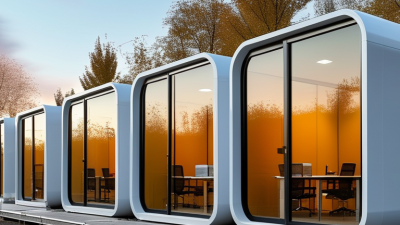
Top Modular Office Buildings Manufacturers Worldwide
Choosing the right Modular Office Buildings manufacturer requires more than comparing attractive renderings or published prices. It demands evidence of engineering quality, production consistency, delivery capability, and long-term support. This guide examines leading manufacturers worldwide through practical criteria that matter on real projects.
Experienced suppliers usually demonstrate their strengths through completed facilities, not promotional language. Their factories should support controlled assembly, accurate dimensional checks, and reliable material handling. On site, details become visible quickly. Door frames must align. Electrical routes must remain accessible. Acoustic panels should reduce conversation noise between workstations. Heating, ventilation, and cooling systems must suit the local climate and occupancy levels.
The manufacturers featured in this overview are considered from an informed, comparative perspective. Attention is given to certifications, design expertise, customization options, project timelines, warranty terms, and after-sales service. Regional building requirements also deserve careful review, because a successful unit in one country may need significant adaptation elsewhere. That gap matters.
No supplier is perfect. Some may offer impressive speed but limited design flexibility. Others may provide advanced finishes while charging more for transport and installation. Buyers should request recent references, inspect specifications, and confirm who controls quality at each stage. Independent professional advice can strengthen the decision, especially for offices requiring specialized power, fire protection, or accessibility features. The goal is not to declare one universal winner, but to identify manufacturers capable of delivering dependable, comfortable, and adaptable workplaces. Details matter. Performance varies.
Read more »
 By:Ethan Carter
- September 11, 2026
By:Ethan Carter
- September 11, 2026

10 Best Prefabricated Workforce Camps for Global Buyers
Choosing among the 10 Best Prefabricated Workforce Camps for Global Buyers requires more than comparing prices or floor plans. A camp may look efficient in a brochure, yet perform poorly under desert heat, heavy rain, or constant worker movement. Real purchasing decisions depend on accommodation density, insulation, fire safety, sanitation, transport access, installation time, and long-term maintenance.
Mark Farmer, a respected construction industry strategist, warned, “Modernise or die.” His statement is not a sales slogan. It highlights the pressure on camp suppliers to improve manufacturing quality, digital coordination, energy performance, and delivery reliability. For global buyers, Prefabricated Workforce Camps should be evaluated as complete operational systems, not simple collections of portable rooms. Kitchens, laundry areas, medical spaces, dining halls, offices, and emergency routes all influence workforce wellbeing and project continuity.
The selection in this guide considers supplier experience, documented projects, material standards, customization options, climate suitability, logistics, and after-sales support. It also recognizes an uncomfortable truth: no single camp is best for every region. A modular unit suitable for a mining site in Canada may need major changes for a tropical infrastructure project. Local inspections still matter. Published specifications can be incomplete, and delivery promises can change when ports, roads, or weather create delays.
That uncertainty deserves attention. The strongest buyers ask difficult questions, request verifiable references, and test assumptions before signing. Performance on paper is useful. Field evidence is better.
Read more »
By:Ethan Carter
- September 11, 2026
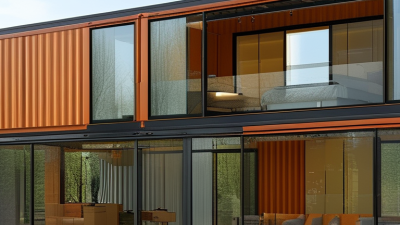
What Is a Flat Pack Container House?
Flat Pack Container Houses are factory-made modular buildings designed for quick assembly, relocation, and repeated use. Their walls, floors, roofs, windows, and electrical components arrive in compact panels or folded modules. At the site, workers connect these parts with bolts, seals, and service lines. The result can resemble a small office, classroom, clinic, dormitory, or temporary home.
The term “container” can mislead. Many units use container-sized dimensions, but they are not always converted shipping containers. A genuine flat pack system usually combines galvanized steel framing, insulated sandwich panels, fire-resistant boards, and prefabricated wiring. The International Energy Agency reports that buildings consumed about 30% of global final energy in 2022. Better insulation and controlled factory production may reduce waste and operating demand, although performance depends on design and installation.
Industry evidence remains encouraging, but it deserves careful reading. McKinsey’s 2019 report, “Modular Construction: From Projects to Products,” estimated that modular methods could reduce construction schedules by 20–50% and costs by roughly 20%. These figures are potential ranges, not promises. Local transport, foundations, climate, labor, and approval requirements can change the result sharply. The Modular Building Institute also emphasizes quality control and repeatable manufacturing as major advantages of modular construction.
A useful definition is simple: Flat Pack Container Houses are transport-efficient, prefabricated structures assembled from engineered components. They are practical tools, not magic boxes. A thin wall may look modern while feeling cold at night. That gap between appearance and performance deserves honest inspection. Choose certified materials, verify structural calculations, and request tested fire, insulation, and moisture data before purchase.
Read more »
 By:Liam Bennett
- September 11, 2026
By:Liam Bennett
- September 11, 2026