0%

Choosing Modular Healthcare Facilities worldwide requires more than comparing factory prices. It demands evidence about clinical safety, local infrastructure, climate, and long-term operation. The WHO and World Bank’s 2023 Global Monitoring Report found that 4.5 billion people lacked full coverage of essential health services in 2021. This pressure makes rapid, adaptable healthcare capacity increasingly important.

Speed matters. So does continuity. A modular clinic may arrive with consultation rooms, isolation areas, medical gases, and electrical systems already assembled. However, the design must match local codes, seismic risks, water quality, and referral networks. The World Health Organization’s 2024 World Health Statistics emphasizes persistent gaps in health outcomes and essential service access. These gaps vary sharply between countries, so one standard building model cannot work everywhere.

Look closely at the details. Can the facility maintain stable temperatures during a power outage? Can staff clean wall joints without damaging finishes? Are oxygen supplies, waste routes, and emergency vehicle access practical? The 2023 Global Status Report for Buildings and Construction notes that buildings account for significant global energy use and emissions. Modular construction can reduce site disruption, but it is not automatically sustainable. Transport distance, insulation, replacement parts, and end-of-life reuse still matter.

A reliable selection process combines supplier experience, verified testing, clinical input, and transparent lifecycle costs. Independent inspections should confirm fire resistance, ventilation, infection-control performance, and accessibility before occupancy. The cheapest unit may become the most expensive after repeated repairs. That is an uncomfortable possibility. Yet it is better to question attractive specifications early than discover weak performance beside a crowded emergency department.
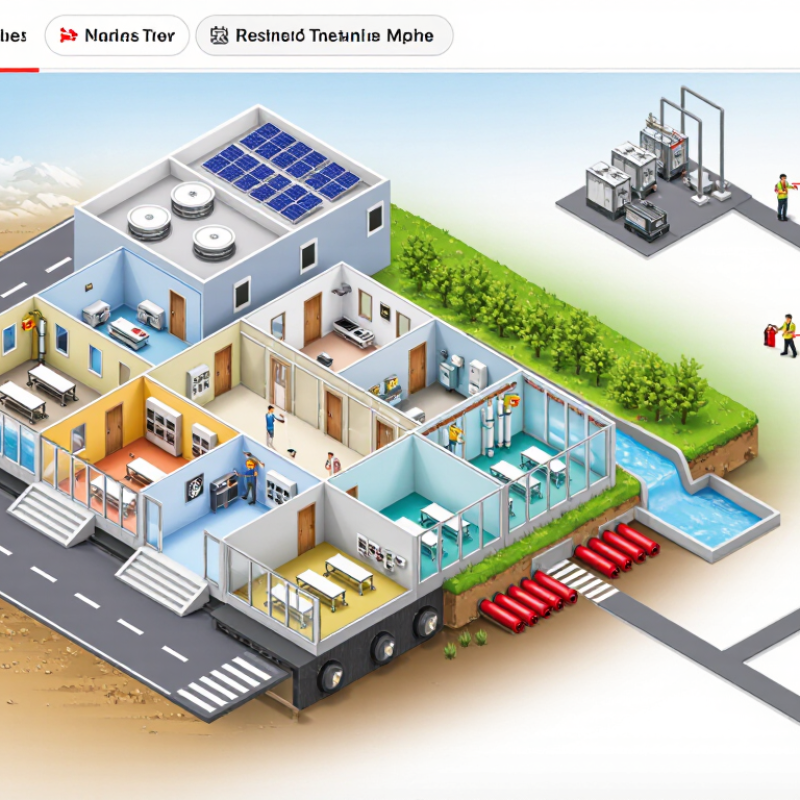
How to Choose Modular Healthcare Facilities Worldwide

Define Facility Needs Using WHO’s 2030 Global Health Workforce Gap

How to Choose Modular Healthcare Facilities Worldwide

The WHO projects a global health workforce shortfall of nearly 10 million workers by 2030. Most of this gap will affect low- and lower-middle-income countries. Facility planning must therefore begin with staffing realities, not only patient numbers.

A modular clinic may include treatment rooms, maternity spaces, laboratories, or staff accommodation. Each unit should support safe workflows with fewer trained professionals.

Distance matters too. Remote facilities need reliable power, water, ventilation, and digital communication.

A practical assessment should compare projected demand with available nurses, clinicians, technicians, and support workers. Modular layouts can reduce unnecessary movement and simplify supervision. They can also expand gradually as local recruitment improves.

However, a larger building cannot solve a workforce shortage alone. This is where planning often becomes imperfect. Designers may overestimate future staffing or underestimate training needs. WHO data provides direction, but local health records must refine every decision.

Tips: Map staffing by shift before selecting modules. Reserve space for future training and telehealth. Check whether local teams can maintain equipment. Test patient flow with a simple floor plan. Ask community health workers where delays usually occur. Review infection prevention requirements with qualified professionals. Treat the 2030 projection as a planning signal, not an exact promise. Forecasts change. Good facilities should adapt without expensive reconstruction.

Match Clinical Functions to ISO 14644 Cleanroom Classes and Risk Levels

Choosing modular healthcare facilities starts with clinical risk, not room size or appearance.

ISO 14644-1 classifies airborne particle concentration, from ISO Class 1 through Class 9. It does not define infection risk by itself. A procedure involving exposed sterile tissue may require tighter particle control than routine consultation. An isolation room may need pressure control and directional airflow instead. These functions should be mapped with infection prevention specialists, engineers, and clinical users.

A modular operating suite might target an appropriate ISO class after reviewing surgical procedures, equipment, traffic, and local healthcare requirements. Sterile preparation can require a highly controlled work zone, while storage or recovery areas may need less stringent classification. Do not copy a classification from another country without checking local standards. During commissioning, verify particle counts, air changes, pressure relationships, temperature, humidity, and recovery time. The plan should also include cleaning access and filter replacement. Those details are often overlooked.

Tips: Create a room-by-room risk matrix before selecting modules. Define acceptable particle limits and pressure direction clearly. Test the completed facility under realistic operating conditions. Review results after staff occupancy, because people and movement change performance. A perfect matrix does not exist. Clinical practice evolves, and the facility must be reassessed when procedures, equipment, or patient risks change.

Compare Modular Timelines, Including 30–50% Faster Off-Site Construction

How to Choose Modular Healthcare Facilities Worldwide

A modular healthcare facility can shorten delivery, but the timeline depends on more than factory speed. McKinsey & Company reported that modular construction can reduce schedules by 20–50% when design, procurement, and production are integrated. The 30–50% range is possible, not automatic. It requires early clinical planning, repeatable room layouts, and reliable transport routes.

Compare the baseline carefully. Traditional projects may build foundations, walls, and services sequentially on site. Modular projects can manufacture patient rooms while groundworks continue. This overlap may remove months from the programme. A typical room arrives with installed medical gases, lighting, flooring, and tested wiring. Less site disruption follows. The Modular Building Institute also identifies schedule reduction as a major benefit of off-site construction, while noting that planning quality strongly affects results.

Details decide the outcome. Check factory capacity, local approvals, fire standards, seismic requirements, and commissioning procedures. A remote hospital may gain from fewer wet trades, yet lose time through shipping delays or limited cranes. That comparison can be messy. The World Health Organization’s guidance on health facility planning reinforces the need for resilient infrastructure, maintainability, and safe clinical workflows. I would also allow contingency. My first schedule estimate is often too optimistic. Weather, customs clearance, utility connections, and late equipment decisions can quietly consume the advantage. Use the 30–50% figure as a performance target, then validate it against local evidence, not marketing promises.

How to Choose Modular Healthcare Facilities Worldwide

Compare modular timelines using a normalized construction schedule index. A conventional project is set at 100, while modular construction is shown at 30–50% faster through off-site fabrication and parallel site preparation.

Interpretation: At a 30% schedule reduction, modular construction requires approximately 70% of the conventional timeline; at 50% faster delivery, it requires approximately 50%. Actual timelines vary by design complexity, permitting, logistics, site readiness, and local regulations.

Verify Electrical and Safety Compliance Under IEC 60601 and NFPA 99

Choosing a modular healthcare facility requires more than checking room size, delivery speed, or visible finishes. Electrical safety must be verified before equipment enters the building. IEC 60601 addresses the safety and essential performance of medical electrical equipment. NFPA 99 focuses on healthcare facility systems, including grounding, power distribution, and emergency power. They serve different purposes. That distinction matters.

Ask for a documented compliance plan, not a general assurance. Review circuit diagrams, protective earth paths, isolation measures, leakage-current controls, and backup-power transfer times. Confirm that equipment locations match the planned patient environment. A bedside monitor, surgical light, and imaging device may have different electrical demands. Inspect cable routes for crush points, moisture exposure, and accidental disconnection. Small details matter. Independent testing should cover installation, functional performance, alarms, and loss-of-power scenarios. Keep records with dates, measured values, equipment identifiers, and corrective actions.

A qualified local engineer should compare the modular design with current national codes and healthcare authority requirements. IEC 60601 and NFPA 99 alone may not satisfy every jurisdiction or adopted edition. Ask who approves revisions after transport, assembly, or site changes. This is where many projects become uncertain. Teams sometimes trust factory documentation too quickly. A checklist can pass while grounding labels remain unclear or access panels block inspection points. Treat that as a warning, not a minor defect. Require witnessed verification before clinical use, followed by risk-based inspections and documented corrective work.

How to Choose Modular Healthcare Facilities Worldwide - Verify Electrical and Safety Compliance Under IEC 60601 and NFPA 99
Verification Dimension IEC 60601 Perspective NFPA 99 Perspective Evidence to Request from the Supplier Acceptance Checkpoint for a Modular Facility Worldwide Applicability
Applicable scope IEC 60601 primarily addresses the basic safety and essential performance of medical electrical equipment and systems. The applicable general, collateral, and particular standards must be identified for each device and intended use. NFPA 99 establishes healthcare-facility requirements for electrical systems, gas and vacuum systems, electrical equipment, emergency management, and related safety risks in facilities within its jurisdiction. Regulatory compliance matrix identifying the facility type, installed medical equipment, applicable IEC 60601 standards, NFPA 99 edition, and local construction codes. Required The design basis clearly separates equipment compliance from facility-infrastructure compliance. Global framework
Local adoption must be confirmed by the authority having jurisdiction.
Risk classification Risk management is used to identify hazards, foreseeable misuse, residual risks, and essential performance for medical electrical equipment and systems. Patient-care spaces are categorized according to the level of risk to patients and staff if electrical systems fail. Risk assessment influences requirements for wiring, power sources, grounding, and continuity of operation. Documented risk assessment, patient-care-space classification, equipment inventory, and failure-mode analysis. Verify The room classification matches actual procedures, equipment, and patient dependency rather than the module’s commercial label. Design-dependent
Definitions and enforcement can vary by national or regional code adoption.
Medical electrical equipment Equipment should be evaluated against the relevant IEC 60601-1 requirements and applicable collateral or particular standards, such as those addressing electromagnetic compatibility, home healthcare, or specific equipment types. Equipment installed in a healthcare facility must be suitable for the environment and coordinated with facility electrical, grounding, emergency-power, and patient-care requirements. Declaration of conformity, test reports from a competent laboratory, risk-management file, user manual, installation requirements, and maintenance instructions. Required Verify rated voltage, frequency, leakage-current limits, environmental conditions, protection class, and essential-performance requirements. Equipment-specific
National medical-device regulations may add requirements.
Power supply and continuity Medical electrical equipment must maintain basic safety and essential performance under specified normal and single-fault conditions, including relevant power interruptions or disturbances defined by the applicable standard. Essential electrical systems are intended to supply designated loads when the normal source is unavailable. Required transfer, distribution, and performance depend on the facility category and the selected loads. Single-line diagrams, load schedule, essential-load list, generator or alternate-source data, automatic transfer-switch documentation, and test records. Verify Critical equipment is connected to the correctly designated power source, with documented transfer testing and accessible maintenance provisions. High priority
Confirm local requirements for generator capacity, transfer time, fuel autonomy, and testing.
Protective earthing and bonding Protective earth connections, accessible conductive parts, creepage, clearance, insulation, and leakage-current protection are key basic-safety considerations for medical electrical equipment. Healthcare electrical systems require grounding and bonding arrangements appropriate to the patient-care area, equipment, receptacles, raceways, and other conductive systems. Grounding and bonding drawings, continuity-test results, protective-conductor sizing, earth-electrode information, and inspection records. Required All modular sections are electrically bonded after assembly, and continuity is tested across transport joints and field connections. Universal safety principle
Test methods and allowable values may be set by local electrical codes.
Isolated power systems IEC 60601 does not by itself prescribe one universal facility-wide isolated-power arrangement; equipment safety depends on the applicable system design, installation, and intended use. Where an isolated power system is used in a critical care area, NFPA 99 addresses the system, line isolation monitoring, alarm functions, grounding, and testing requirements. Isolated-power-system schematic, line isolation monitor specifications, alarm test records, transformer data, and commissioning report. Conditional Install only when required by the adopted code, risk assessment, or clinical design; confirm alarm visibility and response procedures. Jurisdiction-sensitive
Some countries use different protection concepts or national standards.
Leakage current and patient protection IEC 60601-1 includes limits and test methods for protective-earth leakage current, touch current, patient leakage current, and patient auxiliary current under specified conditions. NFPA 99 addresses the facility conditions that support safe use of electrical equipment, including grounding, receptacles, maintenance, and patient-care-area provisions. Equipment leakage-current test reports, field inspection procedures, calibrated test-instrument records, and preventive-maintenance logs. Verify Test values are evaluated using the correct equipment configuration, applied parts, operating mode, and standard edition. Equipment plus facility
Do not substitute a facility inspection for product safety testing.
Electromagnetic compatibility IEC 60601-1-2 addresses electromagnetic disturbances, emissions, immunity, and the intended use environment of medical electrical equipment and systems. NFPA 99 focuses primarily on healthcare-facility safety systems and does not replace the equipment-level EMC evaluation required under applicable IEC or national standards. EMC test report, environmental-use classification, cable-routing plan, wireless-device policy, and separation requirements for sensitive equipment. Verify The modular facility layout controls interference risks from generators, transformers, high-power equipment, radio systems, and temporary devices. Global technical concern
Radio-frequency and telecommunications rules remain country-specific.
Receptacles and branch circuits Equipment documentation defines power requirements and protective measures; the installation must provide compatible voltage, frequency, grounding, and circuit protection. Healthcare branch circuits, receptacles, emergency-power connections, identification, and protection are determined by patient-care-space classification and the adopted NFPA 99 requirements. Branch-circuit schedules, receptacle layout, circuit identification plan, polarity tests, ground-fault or overcurrent protection details, and inspection certificates. Required Receptacle quantity, color or labeling scheme, circuit separation, and emergency-power connections are verified before clinical use. Local code controlled
Plug types, voltage, frequency, and protection devices differ worldwide.
Fire and smoke safety IEC 60601 equipment testing may address fire hazards associated with the equipment, but it does not provide a complete building fire-protection design. NFPA 99 includes healthcare-related fire and life-safety provisions, while building fire protection also requires coordination with other adopted fire and construction codes. Fire-resistance classification, fire-stopping details, smoke-control design, alarm interface, egress plan, fire-load assessment, and inspection certificates. Required Penetrations between modules are fire-stopped, escape routes remain compliant after installation, and fire systems are integrated and tested. Authority approval required
Fire-rating methods and approvals are often nationally regulated.
Medical gases and vacuum IEC 60601 equipment may interface with medical gas or vacuum systems, but facility piping design is generally outside the core scope of IEC 60601-1. NFPA 99 contains requirements for medical gas and vacuum systems, including source equipment, piping, identification, alarms, shutoff valves, testing, and verification. Piping schematics, pressure-test records, cross-connection test, gas identification, zone-valve schedule, alarm test, and cleaning documentation. Verify Module interfaces are clearly identified, protected during transport, pressure-tested after connection, and accepted before patient use. Clinical infrastructure
Local medical-gas standards may supplement or replace NFPA 99 provisions.
Environmental conditions Applicable IEC 60601 standards specify environmental conditions such as temperature, humidity, altitude, ingress protection, and transport or storage conditions where relevant. NFPA 99 addresses facility systems and equipment in healthcare environments; HVAC, ventilation, pressure relationships, and room conditions must also comply with applicable building and healthcare codes. HVAC design criteria, temperature and humidity records, filtration specification, pressure-differential tests, altitude correction, and equipment environmental ratings. Verify The operating environment remains within the limits of both the facility design and each installed medical device. Climate-dependent
Consider hot, humid, cold, dusty, high-altitude, and coastal locations.
Modular transport and reassembly Medical electrical systems must retain their safety and essential performance after installation, relocation, servicing, or configuration changes that could affect safety. Field-installed electrical, grounding, emergency-power, fire-protection, and medical-gas connections require inspection and testing after the modules are assembled on site. Transport procedure, reassembly checklist, interface drawings, torque records, post-installation test reports, and change-control documentation. Required Treat every relocated or reconfigured module as requiring documented recommissioning before clinical operation. Modular-specific
Acceptance authority should be identified before shipment.
Inspection, testing, and maintenance Safety depends on maintenance, inspection, and testing consistent with the equipment manufacturer’s instructions and applicable standards. NFPA 99 requires inspection, testing, and maintenance programs for relevant healthcare systems and equipment, with records available for review. Commissioning plan, preventive-maintenance schedule, calibration certificates, emergency-power test logs, gas-system test reports, and corrective-action records. Required Define responsible personnel, test intervals, acceptance criteria, record retention, and escalation procedures. Lifecycle requirement
Intervals and documentation rules may be modified by local regulations.
Documentation and traceability Technical documentation should support risk control, verification, validation, installation, operation, servicing, and identification of safety-related components. Facility records should demonstrate that systems were designed, installed, inspected, tested, maintained, and modified in accordance with the adopted requirements. As-built drawings, equipment register, serial or asset identifiers, certificates, test results, operating procedures, training records, and revision history. Verify Documentation is delivered in English or the required local language and matches the final installed configuration. Procurement checkpoint
Make document delivery a contractual condition of acceptance.
Authority and certification route IEC standards support conformity assessment but do not automatically constitute legal approval in every country. National regulators may require additional testing or certification. NFPA 99 is enforceable only where adopted or referenced by the relevant authority; the authority having jurisdiction determines acceptable evidence and inspection procedures. Applicable-code statement, certification plan, third-party inspection scope, permit schedule, authority correspondence, and final approval documents. Confirm before purchase Obtain written confirmation of the governing codes, editions, permits, inspection stages, and final occupancy requirements. Country-specific
Never assume IEC 60601 or NFPA 99 alone satisfies all local legal requirements.

Important: IEC 60601 and NFPA 99 address different layers of safety: IEC 60601 primarily covers medical electrical equipment and systems, while NFPA 99 primarily addresses healthcare-facility systems and risk-based infrastructure requirements. Always verify the edition adopted by the relevant authority and obtain project-specific professional review before clinical use.

Score Suppliers by Lifecycle Cost, Local Codes, Logistics, and Service Capacity

Choosing modular healthcare facilities worldwide requires more than comparing purchase prices. A supplier should be scored across the entire operating life. Include design, fabrication, shipping, installation, inspections, maintenance, and removal. A low bid can become expensive after repeated repairs or delayed approvals. Request five-year and ten-year cost scenarios. Use local currency and realistic energy prices. Ask for evidence from completed healthcare projects, not polished claims. Verify references with facility managers. Their daily experience often reveals issues hidden in brochures.

Local codes deserve a separate score, not a footnote. Check structural loads, fire separation, infection-control surfaces, accessibility, electrical safety, medical gases, and emergency systems. Require drawings reviewed by qualified professionals familiar with the destination jurisdiction. Codes may differ between regions, and interpretations can change during permitting. That uncertainty needs a contingency allowance. Do not treat certification as universal. It rarely is.

Logistics should be measured in dates, not promises. Score port access, customs documentation, road limits, lifting equipment, climate protection, and spare-parts storage. A remote clinic may need smaller modules and local repair capacity. Measure service response times in hours and days. Ask who trains maintenance staff after handover. Good documentation matters. Still, no scorecard is perfect. Review it quarterly, because fuel costs, regulations, staffing, and site conditions can shift. A spreadsheet cannot predict every delay.

FAQS

How should cleanroom classes be selected for modular healthcare facilities?

Start with clinical risk, not room size or appearance. Map each room’s function, procedures, equipment, and patient exposure.

Does an ISO 14644 class define infection risk by itself?

No. It classifies airborne particle concentration. Infection risk may also require pressure control, directional airflow, or special procedures.

Which areas may need tighter particle control?

Procedures exposing sterile tissue usually need stricter control than routine consultations. Sterile preparation may need a highly controlled work zone.

What should be tested during facility commissioning?

Verify particle counts, air changes, pressure relationships, temperature, humidity, and recovery time. Test realistic operating conditions.

Why should staff occupancy be included in testing?

People and movement change airflow performance. Doors open. Equipment moves. Review results after normal staff activity begins.

What should a room-by-room risk matrix contain?

Define clinical functions, particle limits, pressure direction, cleaning access, and filter replacement routes. It will not be perfect.

How should suppliers be compared beyond purchase price?

Score design, fabrication, shipping, installation, inspections, maintenance, and removal. Request five-year and ten-year cost scenarios.

Which local requirements need separate review?

Check structural loads, fire separation, infection-control surfaces, accessibility, electrical safety, medical gases, and emergency systems.

How can logistics risks be measured clearly?

Use dates, not promises. Review port access, customs documents, road limits, lifting equipment, climate protection, and spare-parts storage.

Why should supplier performance be reviewed after selection?

Fuel prices, regulations, staffing, and site conditions can change. Review the scorecard quarterly. A spreadsheet misses some delays.

Conclusion

Choosing Modular Healthcare Facilities requires a structured evaluation of clinical needs, compliance requirements, project speed, and long-term value. Begin by defining the facility’s purpose, capacity, and staffing priorities in response to the global healthcare workforce gap projected for 2030. Then align each clinical function with appropriate ISO 14644 cleanroom classifications and risk levels to support safe, efficient operations.

Compare modular delivery schedules with conventional construction, recognizing that off-site production may reduce timelines by approximately 30–50% when planning, manufacturing, and site preparation are well coordinated. Electrical systems, medical equipment interfaces, emergency power, and fire protection should be verified against IEC 60601, NFPA 99, and applicable local regulations. Finally, assess suppliers through a lifecycle-cost perspective, including construction quality, local code expertise, transportation logistics, installation support, maintenance capacity, adaptability, and long-term service responsiveness. This balanced approach helps healthcare organizations select facilities that are practical, compliant, scalable, and resilient.

Amelia

Amelia

Amelia is a dedicated marketing professional with a deep understanding of the company’s products, customers, and evolving market needs. Through years of experience in product communication, content strategy, and customer research, she transforms complex product information into clear, practical,......