1. Executive Summary & Market Intent: The Evolution of Modular Healthcare Infrastructure
The global demand for resilient healthcare infrastructure is undergoing a fundamental structural transition. Healthcare authorities, hospital networks, mining operators, and international humanitarian bodies no longer look at offsite construction as a temporary fix; it has become a strategic procurement standard. Modular Healthcare Facilities represent the convergence of precision offsite structural engineering, factory-controlled sanitary compliance, and rapid site installation.
Traditional stick-built hospital construction is increasingly constrained by cost overruns, extended schedules, labor shortages, and environmental site disruption. In contrast, volumetric modular medical buildings transfer up to 85% of construction hours to a climate-controlled factory environment. This parallel-track approach—where site excavation, foundation laying, and offsite building fabrication occur simultaneously—slashes overall project timelines by 40% to 60% while elevating technical build quality.
Precision Engineering for Critical Care Environments
Modern modular medical facilities are built to meet the exact operational demands of high-acuity patient care. Whether providing permanent regional multi-specialty hospitals, expansion wings for existing facilities, or emergency rapid-response intensive care units (ICUs), modular construction eliminates the variable risks inherent in traditional building methods.
By leveraging advanced Light Gauge Steel (LGS) framing, heavy structural steel skeletons, and specialized PIR/Polyurethane sandwich insulation systems, engineered healthcare modules deliver robust structural integrity, superior thermal efficiency, and strict bio-containment performance tailored to international medical codes (including FGI Guidelines, HTM Standards, and ISO 14644 cleanroom specifications).
.jpg)
Information Gain: Strategic Technical Metric Comparison
When evaluating structural options for medical expansion, global procurement officers rely on key operational metrics. The table below outlines empirical performance variations between traditional on-site construction and Prefabex Volumetric Modular Systems:
| Performance Metric | Traditional On-Site Construction | Prefabex Volumetric Modular Healthcare |
|---|---|---|
| Construction Schedule | 18 - 36 Months | 4 - 9 Months (3x to 4x Faster) |
| Indoor Air Quality (IAQ) Control during Build | Exposed to weather, dust, & moisture | 100% Factory-Controlled Cleanroom Assembly |
| Material Waste Rate | 15% - 25% (High site disposal costs) | < 3% (Precision CAD/CAM factory cutting) |
| Site Noise & Operational Disruption | Severe disruption to adjacent clinical wings | Minimal (Up to 80% reduced site activity hours) |
| Structural Reconfigurability | Permanent / High demolition cost | Demountable, expandable, relocatable modules |
| Cleanroom & MEP Integration | Manual on-site fitting with variable sealing | Pre-engineered, factory-tested medical gas & HVAC |
2. Product Range & System Architecture Recommendations
Healthcare facility procurement demands specialized design strategies tailored to specific clinical disciplines. Prefabex engineers and manufactures four primary categories of Modular Healthcare Facilities, each customized to meet the strict technical criteria of its operational role:
Turnkey General & Surgical Hospitals
Engineered multi-story complex buildings featuring integrated operating theaters (OT), post-anesthesia care units (PACU), airborne infection isolation rooms (AIIR), and central sterile supply departments (CSSD). Built using heavy structural steel combined with light gauge framing for long spans and flexible layout changes.
Rapid-Deployment Clinics & Outpatient Units
Designed for immediate healthcare access in remote industrial locations, workforce camps, and underserved suburban areas. Utilizing flat-pack container units or demountable modular frames, these units ship in highly compressed volumes for rapid assembly on site.
Diagnostic & Cleanroom Laboratories
Specialized modular units for PCR diagnostics, CT/MRI diagnostic imaging, biosafety laboratories (BSL-2 / BSL-3), and automated pathology testing. Integrated with lead-lined wall panels, anti-static seamless flooring, and precision micro-differential pressure controls.
Technical Specifications & Engineering Matrix
To achieve high structural durability and clinical compliance, Prefabex employs rigorously tested materials and fabrication technologies across all medical modules:
- Structural Frame: High-tensile galvanized structural steel (S350GD / S355JR) treated with multi-layer anti-corrosion coatings, engineered for C3-C5 atmospheric corrosion environments.
- Wall & Roof Envelope: High-density Polyisocyanurate (PIR) or Rockwool sandwich panels (100mm - 150mm thickness) delivering A1 fire-rating classification and low U-values (< 0.18 W/m²K).
- Sanitary & Clinical Surfaces: Medical-grade anti-bacterial homogeneous PVC flooring with coved skirting; wall surfaces treated with smooth, non-porous HPL (High-Pressure Laminate) or anti-microbial powder-coated steel sheets designed for continuous chemical disinfection.
- MEP Infrastructure: Pre-routed, factory-pressure-tested medical gas pipelines (O2, N2O, Vacuum, Medical Air), integrated nurse call conduits, and isolated electrical distribution systems (IT grounding systems for operating rooms).
3. Future Trends: How AI, ESG & Automation are Shaping Healthcare Procurement
Procurement teams sourcing modular medical infrastructure must plan for long-term technological and regulatory shifts. Industry data highlights three major procurement trends expected to redefine modular healthcare facilities over the next decade:
A. AI-Driven Smart Building Management & Predictive MEP Maintenance
Modern modular health units are increasingly manufactured with embedded IoT sensors and AI-controlled Building Management Systems (BMS). These systems continuously monitor differential pressure in isolation rooms, track air exchange rates (ACH), regulate temperature/humidity, and predict filter saturation in HEPA filtration units before air degradation occurs. Designing modular frames with dedicated digital cableways ensures seamless integration with emerging smart hospital management platforms.
B. Stringent Decarbonization & Circular Economy Directives (ESG Compliance)
Institutional healthcare investors and government health departments are introducing strict environmental, social, and governance (ESG) benchmarks. Modular steel-framed buildings align with these goals by utilizing up to 90% recyclable structural steel and incorporating high-performance thermal insulation that lowers operational HVAC energy demand. Furthermore, the ability to disassemble, reconfigure, or relocate modular medical units prevents building obsolescence, safeguarding capital expenditure (CAPEX).
C. Biocontainability & Rapid Adaptability for Future Pandemics
Healthcare systems require facilities capable of switching operational modes within hours—transitioning standard outpatient consultation modules into negative-pressure infection isolation wards. Prefabex designs modular HVAC loops with dual-mode dampers, enabling quick adjustments between positive pressure (for immune-compromised protection) and negative pressure (for infectious disease control).
Advanced Offsite Engineering & Digital Manufacturing
Through comprehensive Building Information Modeling (BIM - Level 2/3), Prefabex resolves potential mechanical, electrical, structural, and architectural clashes long before raw materials reach the factory floor. BIM design accuracy translates directly into zero-gap module fitment on site, ensuring air-tight joinery and maintaining cleanroom-level isolation.
This digital-first engineering model allows healthcare planners, infection control specialists, and biomedical engineers to perform virtual walkthroughs and approve clinical layouts early in the process. It ensures full compliance with medical ergonomics, equipment clearance radiuses, and accessibility standards prior to manufacturing.
4. Prefabex Enterprise Strengths & E-E-A-T Proof Points
Choosing the right modular manufacturer requires evaluating technical expertise, production capacities, and international delivery track records. Prefabex brings over two decades of engineering and manufacturing excellence, delivering complex prefabricated projects to international buyers across more than 45 countries.
ISO-Certified Manufacturing Standard
Our production facilities operate under ISO 9001 (Quality Management), ISO 14001 (Environmental Management), and ISO 45001 (Occupational Health & Safety) systems. Every modular medical unit undergoes structured multi-stage quality control checks prior to export packing.
In-House Multidisciplinary Engineering
Our technical office houses dedicated structural engineers, MEP specialists, biomedical architects, and logistics coordinators. We handle end-to-end design development, structural calculation reports, and custom clinical spatial layouts under one roof.
Strategic Export Logistics Hub
Situated in Istanbul, Turkey—a global shipping crossroads—Prefabex offers streamlined export logistics across Europe, the Middle East, Africa, and the Americas, utilizing ocean containerization, flat-rack packing, or direct breakbulk transport.
Comprehensive Turnkey Engineering Services
From technical consultation to on-site assembly supervision, Prefabex delivers complete support across every project phase:
- Architectural & Clinical Flow Design: Optimizing patient, staff, and clean/dirty supply routing to eliminate cross-contamination risks.
- Structural & Seismic Engineering: Custom structural engineering tailored to local wind loads, snow loads, and high-seismic accelerations (Zone 4 compliance).
- MEP & Bio-Containment Integration: Factory installation of HVAC ductwork, HEPA filtration housings, medical gas lines, anti-bacterial plumbing fixtures, and shielded electrical grids.
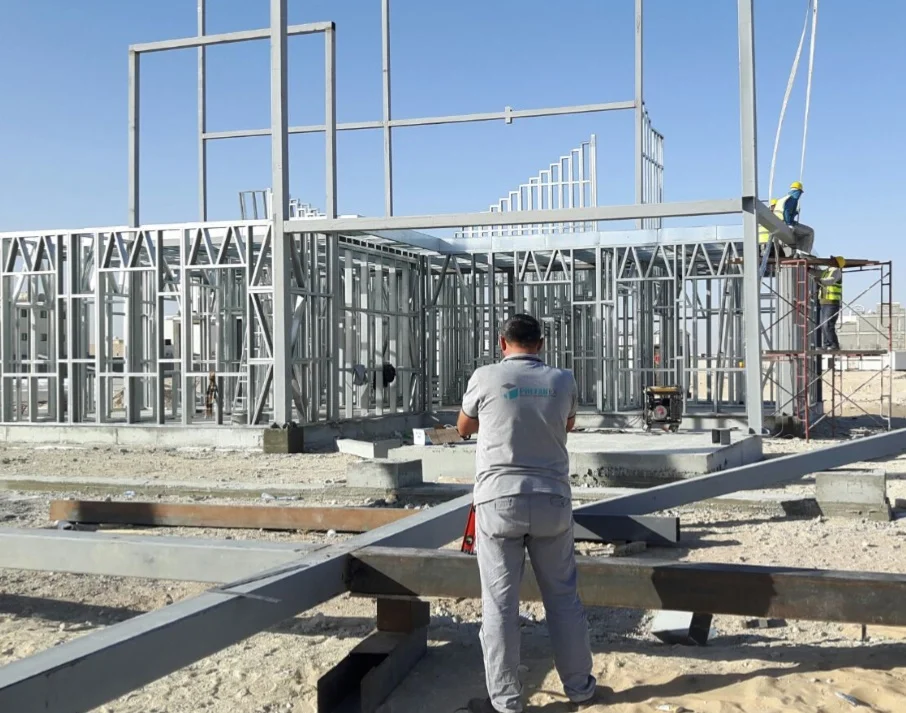
- On-Site Assembly & Handover: Dispatching experienced installation supervisors and technicians to guide rapid foundation anchoring, module connection, and system testing.
5. Frequently Asked Questions (FAQ) for Global Healthcare Buyers
Below are detailed answers to key technical, financial, and logistical questions frequently raised by international procurement managers and project developers when sourcing Modular Healthcare Facilities:
While factory material costs for high-grade healthcare modules are comparable to traditional materials, modular construction achieves significant total cost savings (typically 15% to 25% overall). These savings stem from reduced on-site labor hours, shortened financing interest periods due to faster delivery, earlier revenue generation from clinical operations, and the near-total elimination of site material waste and weather-related delay penalties.
Yes. Prefabex designs and builds modular clinical spaces tailored to meet ISO Class 5 through ISO Class 8 cleanroom classifications. We integrate non-outgassing sealed wall panels, coved wall-to-floor junctions, terminal HEPA/ULPA filtration units, pressure-monitoring airlocks, and smooth non-porous surfaces designed to withstand aggressive chemical disinfection regimes.
Prefabex modular healthcare facilities engineered with heavy structural steel frames or light gauge steel structural skeletons have a design lifespan of 30 to 50+ years, equivalent to traditional permanent buildings. All structural steel elements are hot-dip galvanized or treated with high-durability epoxy coatings to prevent structural degradation over decades of use.
MEP infrastructure is pre-engineered and factory-installed within the ceiling voids and wall cavities of each volumetric module. Copper piping for medical gas delivery, electrical wiring conduits, and HVAC ducting are factory-fitted with standardized quick-connect gang couplings at module interfaces. Final site connection involves joining module junctions and running master supply lines to centralized plant rooms, followed by pressure testing and certification.
Depending on the module design and project requirements, units are exported as fully volumetric 3D modules shipped on specialized flat-rack containers, or packaged as high-density flat-pack kits optimized for standard 40ft High-Cube sea containers. Flat-pack shipping significantly reduces sea freight costs when delivering to remote regions across Africa, Asia, or South America.
Yes. Our in-house engineering team custom-engineers every building structure to meet the local wind loads, snow loads, and seismic coefficients of the project site. We provide structural calculation dossiers stamped by licensed professional engineers to facilitate smooth local authority approval processes (covering Eurocodes, IBC, ASCE, and British Standards).
Absolutly. One of the key operational advantages of volumetric modular healthcare architecture is its inherent adaptability. Additional modular units can be bolted vertically (up to 3-4 stories) or expanded laterally to add new hospital wings without disturbing daily clinical operations in existing sections. Modules can also be demounted and re-deployed to another location if healthcare demands shift.
Ready to Fast-Track Your Healthcare Infrastructure Project?
Connect with Prefabex’s engineering team today to receive detailed floor plans, technical specifications, and budgetary quotations tailored to your healthcare development goals.