0%

Choosing the right educational facility is rarely simple. Climate, enrollment, budget, and local building standards all shape the decision. For global buyers, Modular Educational Buildings offer a practical way to expand learning spaces without waiting years for traditional construction. A classroom can arrive with insulated wall panels, wiring, windows, and flooring already prepared. This reduces site disruption and helps schools respond to growing demand.

This guide introduces seven strong modular options for international education projects. The selection considers classroom comfort, installation speed, durability, maintenance, accessibility, and long-term value. Some buildings suit temporary campuses, while others support permanent schools, laboratories, libraries, or administration areas. Details matter. A shaded veranda can improve outdoor circulation in hot regions. High-performance insulation can reduce heating costs in colder climates. Moisture-resistant materials may protect classrooms in humid locations.

Real project experience shows that attractive designs are not always the best investments. Local transport routes, foundation conditions, utilities, and skilled labor can change the final cost. That part is easy to underestimate. Buyers should confirm fire safety, ventilation, sanitation, accessibility, and structural requirements with qualified local professionals. Supplier claims also need careful verification through references, drawings, certifications, and warranty terms.

No single model fits every country or school. Some recommendations may require adjustment after a site survey. That is normal. The goal is not to promote one universal solution, but to help decision-makers compare dependable options with clearer expectations. With thoughtful planning, modular construction can create safe, welcoming, and adaptable learning environments for students and teachers worldwide.
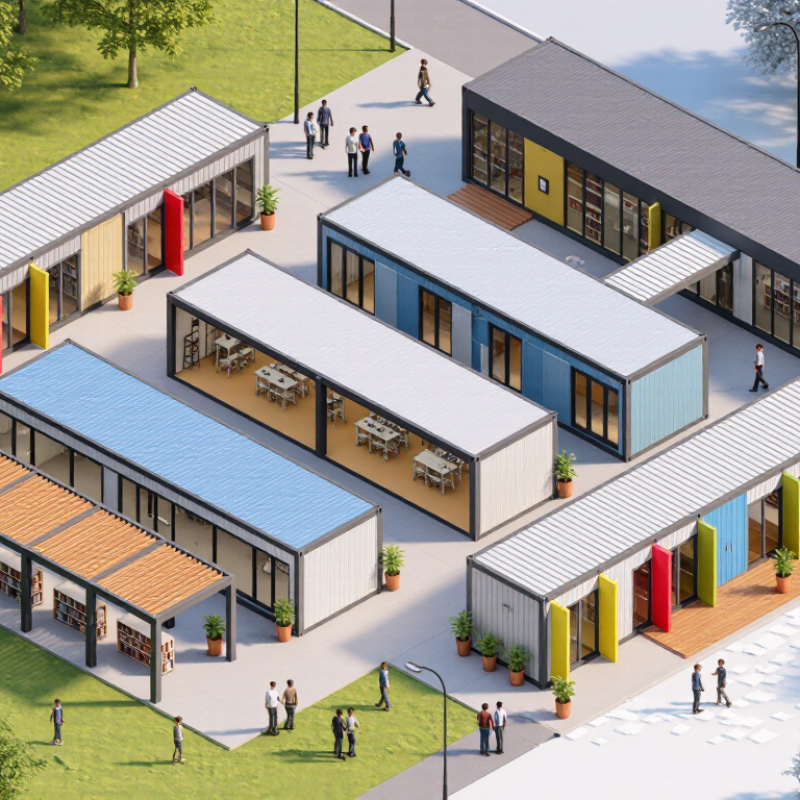
7 Best Modular Educational Buildings for Global Buyers

Definition and Ranking Criteria: Modular Projects Can Cut Schedules by 20–50%

7 Best Modular Educational Buildings for Global Buyers

Modular educational buildings are factory-produced structures assembled on prepared sites. They may include classrooms, laboratories, libraries, or temporary learning spaces. In well-coordinated projects, modular methods can reduce schedules by 20–50%. The actual saving depends on design approval, ground conditions, transport, and local installation capacity. A faster factory process cannot fix poor site planning.

For global buyers, ranking should begin with educational performance, not appearance. The strongest projects provide daylight, acoustic control, safe circulation, accessible entrances, and flexible room layouts. Climate resilience also matters. Insulated panels, shaded windows, raised floors, and protected drainage can improve comfort in demanding regions. Procurement teams should examine fire compliance, material documentation, warranty terms, maintenance access, and spare-part availability. These details often separate a reliable building from an attractive but costly one.

Cost transparency deserves equal weight. A credible comparison includes manufacturing, shipping, foundations, utilities, assembly, inspections, and future repairs. Factory quality checks can reduce waste, yet transportation may create unexpected expenses. My assessment would favor proven delivery records over impressive renderings. No ranking is flawless. Local approval timelines remain difficult to predict, especially when imported components are involved. A 20% schedule reduction may be more realistic than a 50% claim for complex campuses. Real classrooms need more than speed. They need quiet corners, durable floors, and doors that withstand daily use.

Seven Modular School Types: Classrooms, Laboratories, Dormitories, and Offices

Modular educational buildings now serve schools, training centers, and temporary campuses worldwide. Seven types are especially practical for global buyers.

General classrooms need strong daylight, quiet insulation, durable floors, and flexible furniture layouts. A 60-square-meter room may support thirty students, depending on local regulations.

Science laboratories require non-slip flooring, wash stations, safe storage, and reliable ventilation.

Computer laboratories need stable power, cable management, cooling, and glare-controlled lighting. Small design errors can disrupt daily lessons.

Dormitories should separate sleeping, washing, studying, and emergency access areas. Designers must consider privacy, accessibility, fire protection, and local climate conditions.

Administrative offices benefit from reception areas, secure records storage, meeting rooms, and clear visitor circulation.

Libraries and resource centers need controlled humidity, comfortable lighting, and quiet reading zones. They also need enough charging points.

The seventh type is a dining and student-service block. It may include a kitchen, dining hall, first-aid room, and sanitation facilities. Hygiene finishes and efficient drainage matter greatly. They are often underestimated.

Before procurement, buyers should review structural calculations, material certificates, fire tests, ventilation data, and installation procedures. Transport routes deserve equal attention. A module that cannot reach the site creates costly delays. Local engineers should verify soil conditions, seismic risks, accessibility rules, and utility connections. Factory inspections can reveal loose fittings or poor seals, although inspection alone cannot replace careful site supervision. Some projects still overvalue speed and underfund maintenance planning. That choice deserves serious reconsideration.

Structural Standards: IBC, Eurocodes, ISO 9001, and Local Building Regulations

7 Best Modular Educational Buildings for Global Buyers

Structural Standards: IBC, Eurocodes, ISO 9001, and Local Building Regulations

Modular classrooms must satisfy the destination country’s rules, not only factory specifications. The International Building Code supports structural, fire, accessibility, and occupancy requirements across many jurisdictions. However, local authorities may adopt different editions or amendments. A compliant design on paper can still fail during approval.

Eurocodes apply a similar principle through national annexes. Wind, snow, seismic, and thermal values can change between regions. Designers should verify foundation loads, connections, fire resistance, and escape routes before production. The 2024 Modular Building Institute report valued permanent modular construction in the United States and Canada at approximately 20.3 billion dollars in 2023. That scale shows growing demand, but it does not remove regulatory responsibility.

ISO 9001 strengthens the manufacturing process through documented inspections, corrective actions, and traceability. The ISO Survey 2022 recorded more than one million ISO 9001 certificates worldwide, reflecting its broad industrial use. Yet ISO 9001 is not a structural code. Buyers should request material certificates, welding records, factory inspection reports, and independent calculations. Local engineers must confirm drainage, accessibility, energy performance, and fire approvals. Small details matter. A missing national annex can alter the design. Even experienced teams make assumptions, and those assumptions deserve review before shipping.

7 Best Modular Educational Buildings for Global Buyers

Typical planning capacity by modular educational building format, with structural compliance considered under IBC, Eurocodes, ISO 9001 quality management, and local building regulations.

The figures show practical planning benchmarks rather than statutory occupancy limits: classroom and laboratory modules are commonly planned for approximately 24 students, while libraries, cafeterias, and multipurpose halls support larger shared groups. Final capacity, structural design, fire safety, accessibility, energy performance, and approval requirements must be verified against the project location’s adopted IBC edition, applicable Eurocodes, ISO 9001 quality procedures, and local building regulations.

Sustainability Metrics: Modular Construction Can Reduce Site Waste by Up to 90%

7 Best Modular Educational Buildings for Global Buyers

Sustainability Metrics: Modular Construction Can Reduce Site Waste by Up to 90%

Modular educational buildings can move much of the cutting, drilling, and assembly into controlled factories. This limits damaged materials, packaging loss, and weather-related rework at the school site. WRAP guidance on offsite construction reports that waste reductions can reach up to 90% in suitable projects. The result depends on design accuracy, factory controls, and local recycling capacity.

Measure it.

Global buyers should request waste data per square metre, not broad environmental promises. The U.S. Environmental Protection Agency estimated 600 million tons of construction and demolition debris were generated in 2018. Modular procurement cannot solve that whole problem. It can, however, reduce site disturbance and improve material tracking. A practical tender should record factory waste, site waste, reused materials, landfill diversion, and transport emissions. The World Green Building Council also identifies construction materials and processes as major contributors to building-related carbon emissions.

The numbers need careful review. A 90% reduction may apply only to site waste, not total project waste or embodied carbon. That distinction matters. Buyers should compare identical building scopes, including foundations, utilities, furniture, and delivery distances. Factory efficiency may be weakened by long shipping routes or excessive packaging. Some reports also rely on project-specific conditions. Ask for measurement methods, baselines, and third-party verification before accepting the claim.

Global Buyer Checklist: Cost, Logistics, Lifespan, Safety, and Warranty Data

7 Best Modular Educational Buildings for Global Buyers

Global buyers often compare seven formats: classrooms, STEM labs, libraries, offices, dormitories, dining halls, and health units. The best choice depends on total installed cost, not factory price. Include foundations, permits, shipping, cranes, utility connections, and local taxes. McKinsey’s 2019 modular construction report found that modular methods can reduce project schedules by 20–50%. However, remote delivery can erase those savings. Check port access, road width, lifting equipment, customs documents, and spare-part availability.

Lifespan depends on climate and maintenance. Request corrosion protection, insulation values, fire ratings, drainage details, and replacement plans for roofs and seals. The 2023 UNEP Global Status Report for Buildings and Construction links buildings with about 30% of global energy demand. Efficient envelopes can reduce classroom cooling costs. Safety evidence should include structural calculations, fire tests, electrical certificates, accessibility checks, and wind or seismic design data. Do not accept “international standard” without the exact standard and test date. A cheap unit can become expensive after one rainy season.

Tips: Ask for a five-year cost model. Require separate warranty periods for structure, envelope, equipment, and finishes. Confirm repair response times in writing. Compare at least three delivery routes. A 12-month warranty may be inadequate for hidden moisture defects. Buyers should also inspect one completed school, not only factory samples. This step feels slow, but it exposes weaknesses that brochures conceal.

FAQS

How much site waste can modular educational construction reduce?

Suitable projects may reduce site waste by up to 90%. That figure is not automatic. It may exclude factory waste, packaging, transport, and total project waste. Factory cutting can reduce damaged materials and weather-related rework.

What environmental data should buyers request?

Request waste data per square metre. Include factory waste, site waste, reused materials, landfill diversion, and transport emissions. Ask for the baseline and measurement method. Independent verification helps, though it may not remove every doubt.

Which educational building formats are commonly available?

Common formats include classrooms, science laboratories, libraries, offices, dormitories, dining halls, and health units. The best option depends on local needs. A classroom near a coastal road may need different protection than one inland.

What costs should be included beyond the factory price?

Include foundations, permits, shipping, cranes, utilities, taxes, furniture, and site preparation. A low factory price can become expensive after delivery. Request a five-year cost model. Do not compare incomplete scopes.

Can modular construction shorten the project schedule?

Modular methods may reduce schedules by about 20% to 50%. Factory work can happen while site preparation continues. Remote roads, customs delays, or missing lifting equipment may erase those savings. The schedule estimate needs local evidence.

What logistics should global buyers check?

Check port access, road width, cranes, customs documents, and spare-part availability. Compare at least three delivery routes. A wide module may fit the factory plan but fail on a narrow village road. Logistics are easy to underestimate.

How should buyers evaluate lifespan and climate performance?

Request corrosion protection, insulation values, fire ratings, drainage details, and replacement plans. Climate affects roofs, seals, cooling needs, and metal components. A cheap unit may develop moisture problems after one rainy season. Maintenance assumptions deserve careful review.

What safety and warranty evidence is important?

Require structural calculations, fire tests, electrical certificates, accessibility checks, and wind or seismic data. Ask for exact standards and test dates. Separate warranty periods should cover structure, envelope, equipment, and finishes. A twelve-month warranty may miss hidden moisture defects.

Should buyers inspect a completed educational building?

Yes, inspect a completed building, not only a factory sample. Look for damp corners, roof seals, drainage, finishes, and repair quality. Ask how quickly damaged parts can be replaced. The inspection feels slow. It can reveal what brochures hide.

Conclusion

Modular Educational Buildings offer global buyers a practical way to deliver high-quality learning spaces with greater speed, flexibility, and cost control. This guide ranks leading modular project types, including classrooms, laboratories, dormitories, and administrative offices, using criteria such as construction time, adaptability, durability, safety, and total value. Depending on project complexity, modular methods may shorten schedules by approximately 20–50% compared with conventional construction.

The guide also explains how buyers can evaluate structural compliance through IBC, Eurocodes, ISO 9001 quality practices, and applicable local building regulations. Sustainability is another key consideration, as factory-based production can reduce on-site waste by up to 90% while improving material efficiency. Before purchasing, global buyers should compare costs, transportation requirements, expected lifespan, safety documentation, maintenance support, and warranty terms to select a reliable solution suited to local conditions and long-term educational needs.

Amelia

Amelia

Amelia is a dedicated marketing professional with a deep understanding of the company’s products, customers, and evolving market needs. Through years of experience in product communication, content strategy, and customer research, she transforms complex product information into clear, practical,......