0%

Portable Guard Booths provide a compact, controlled point for monitoring entrances, parking areas, construction sites, and private facilities. Unlike a permanent security building, a portable booth arrives largely assembled and can be positioned where visibility is urgently needed. It may include insulated panels, safety glass, LED lighting, ventilation, electrical outlets, communication equipment, and a raised floor. The exact design varies. That matters.

Security consultant Michael J. Fagel explains the core principle clearly: “A guard post works best when visibility, communication, and shelter support one another.” This idea helps readers understand how Portable Guard Booths work in practice. An officer observes vehicle movement, checks authorized access, communicates with site personnel, and remains protected from rain, heat, wind, and routine workplace hazards. The booth does not replace trained judgment. It supports it.

This article examines the booth’s structure, operating features, placement, and practical limitations. A well-positioned booth can improve sightlines and reduce unnecessary walking between checkpoints. Clear windows help. So does adequate lighting. However, a booth may perform poorly if parked behind equipment, surrounded by glare, or disconnected from reliable communication systems. That is an easy detail to overlook.

Real-world performance depends on more than attractive materials. Buyers should consider climate, accessibility, power supply, camera integration, maintenance, and the guard’s daily workflow. Comfort is not merely a luxury. A tired operator may miss important details. Portable Guard Booths are useful tools, but thoughtful planning determines whether they provide meaningful operational value.
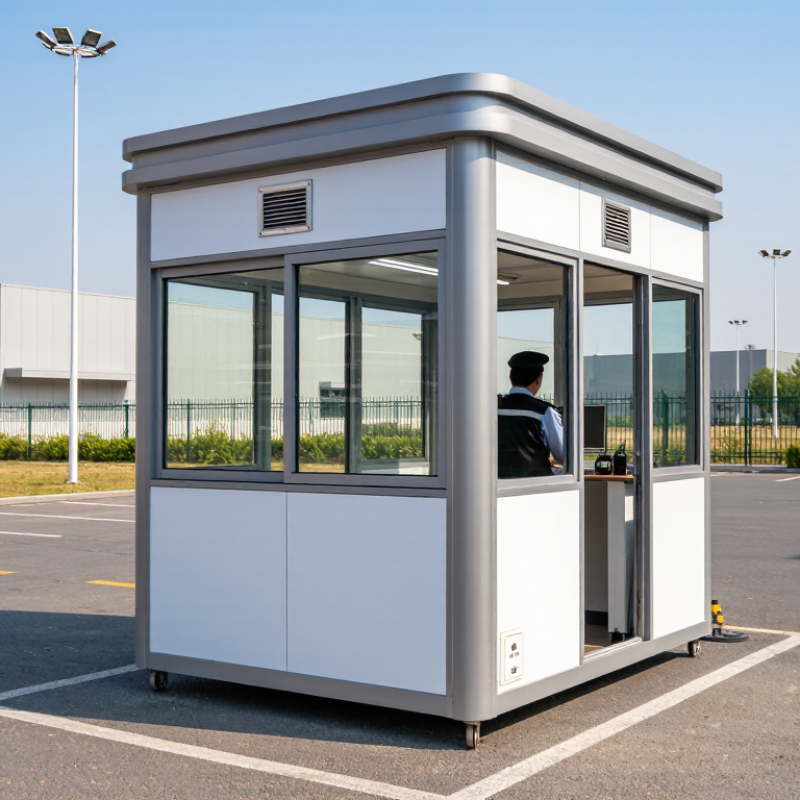
What Is a Portable Guard Booth and How Does It Work?

Definition and Core Purpose of a Portable Guard Booth

What Is a Portable Guard Booth and How Does It Work?

A portable guard booth is a movable, enclosed workspace for security personnel. It is usually built with insulated panels, a framed door, windows, lighting, ventilation, and basic electrical connections. Unlike a permanent guardhouse, it can be delivered, positioned, and relocated when site conditions change. Its core purpose is clear: provide a protected observation point near an entrance, checkpoint, parking area, or restricted work zone.

The booth helps personnel monitor people, vehicles, deliveries, and surrounding activity from one controlled location. Wide windows improve visibility, while raised flooring or a sealed base can reduce contact with moisture and uneven ground. Inside, a desk, communication equipment, heater, or cooling unit may support longer shifts. Good placement matters. The operator needs a clear view without blocking traffic or creating blind corners.

It is not a perfect solution.

Experienced site teams inspect the booth before use. They check door locks, window condition, lighting, ventilation, and power connections. They also confirm that the foundation is stable and that local safety requirements are addressed. A portable booth may look secure, yet poor positioning can weaken its value. Small oversights happen, especially during fast installations. Regular checks help reveal damaged seals, dim lights, uncomfortable temperatures, or visibility problems before they affect daily operations.

Main Components and Structural Features

A portable guard booth is a compact, movable workspace for monitoring entrances, parking areas, or controlled sites. Its structure usually begins with a welded steel or aluminum frame. The frame carries the wall panels, roof, door, and viewing windows. Many units use insulated sandwich panels to reduce heat transfer and outside noise. However, insulation performance depends on panel joints, not only panel thickness.

The windows are often positioned on several sides to improve visibility around vehicles and pedestrians. Clear laminated or tempered glazing can provide strength and safer breakage behavior. A solid door normally includes hinges, a lockset, a closer, and weather seals. The floor may contain a steel base, rigid insulation, and a slip-resistant surface. Small details matter. Poor sealing around the door can cause drafts, water entry, and uncomfortable working conditions.

Electrical components may include interior lighting, outlets, ventilation, heating, and cooling equipment. Their layout should support safe maintenance and avoid blocking the operator’s sightlines. Lifting points or forklift pockets allow relocation, while adjustable supports help stabilize uneven ground. In practical inspections, anchoring is sometimes treated as an afterthought. That is a mistake, especially in windy locations. The booth should be checked for frame distortion, loose fasteners, damaged seals, and drainage problems after transport. A portable design is useful, but it is not automatically suitable for every climate or site condition.

How a Portable Guard Booth Operates

A portable guard booth is a prefabricated workspace that can be moved when site needs change. It usually includes insulated panels, a lockable door, windows, lighting, ventilation, and basic electrical connections. The U.S. Bureau of Labor Statistics reports more than one million security guard jobs nationwide, showing why practical guard facilities remain important. A booth gives personnel shelter while preserving a clear view of entrances, vehicle lanes, and visitor areas.

How a Portable Guard Booth Operates

Operation begins with careful placement. Technicians level the booth, confirm safe pedestrian clearance, and connect approved power supplies. Inside, guards may use radios, visitor logs, monitors, intercoms, and access-control equipment. Windows should reduce glare and provide broad sightlines, especially during rain or night shifts. Heating and cooling support alertness, but poor ventilation can still make a small booth uncomfortable.

The International Facility Management Association emphasizes planned maintenance for reliable facility performance. In practice, teams should inspect door hardware, seals, lights, alarms, and electrical connections regularly. The booth is portable, not careless. Anchoring may be necessary in exposed locations, and emergency exits must remain usable. I have seen layouts that looked efficient but created blind spots beside the entry lane. That detail deserves a second review. Even a well-equipped booth cannot replace clear procedures, trained personnel, and dependable communication.

How a Portable Guard Booth Operates

A portable guard booth provides a compact, relocatable workspace for security personnel. Its footprint determines the available room for access control, visitor processing, communications, monitoring equipment, and basic staff movement.

The chart shows calculated floor areas for commonly used rectangular booth footprints. Area is calculated as length multiplied by width; actual booth dimensions vary by site requirements and manufacturer specifications.

Common Uses and Suitable Locations

Portable guard booths serve as compact checkpoints for security staff, visitor control, and site observation. They are factory-built units that can be moved by forklift, trailer, or crane. A typical booth includes a lockable door, viewing windows, lighting, ventilation, and an electrical connection. Some models add heating, cooling, communication equipment, or a small desk. The process is simple: an officer stays inside while monitoring people, vehicles, cameras, and access records.

Their common uses include construction entrances, warehouse yards, parking facilities, residential developments, and temporary events. At a busy gate, the booth provides shelter from rain, dust, and winter wind. It also keeps the guard close to arriving traffic. Staff can check deliveries, record contractors, and direct visitors from one controlled point. At a construction site, positioning the booth near the vehicle entrance can improve visibility without using permanent floor space.

Location matters more than appearance. The booth should face approaching vehicles, with clear sightlines and enough room for turning, queuing, and emergency access. A level, well-drained base helps prevent movement and water damage. Power, lighting, and safe pedestrian routes need checking before delivery. Avoid blind corners, heavy exhaust areas, and flood-prone ground. Small details matter. A poorly placed booth may protect the guard but weaken supervision. Traffic patterns can change, so the position should be reviewed after the site becomes active.

Key Factors in Selection, Installation, and Maintenance

What Is a Portable Guard Booth and How Does It Work?

Key Factors in Selection, Installation, and Maintenance

A portable guard booth is a relocatable security workspace with controlled entry, clear glazing, lighting, ventilation, and communication equipment. It allows personnel to monitor vehicles, visitors, and pedestrian movement from one protected position. Selection should begin with site conditions, not appearance. Measure traffic volume, turning space, sun exposure, wind direction, and available power. A booth beside a loading gate needs stronger visibility and impact protection than one at a quiet pedestrian entrance.

Safety data matters. The U.S. Bureau of Labor Statistics recorded 5,283 fatal work injuries in 2023. That figure does not prove every site needs a booth, but it supports careful planning around vehicle separation, lighting, and emergency access. The BLS Occupational Outlook Handbook also projects about 162,000 security guard openings annually from 2023 to 2033. Comfort and visibility affect real performance. Small details matter.

Installation requires a level base, secure anchoring, weather sealing, and protected cable routes. Confirm that doors open freely and windows do not create glare at night. OSHA guidance supports controlled access, reliable communication, and clear emergency procedures. Maintenance should include monthly checks of locks, seals, lights, heaters, ventilation filters, and radio systems. Clean glazing improves observation. Neglected filters can reduce comfort quickly. A perfect setup rarely exists. Recheck it after storms, traffic changes, or staff feedback. The weakest assumption may be the most expensive one.

FAQS

What is a portable guard booth?

It is a prefabricated workspace that can move when site needs change. It usually has insulated panels, windows, a lockable door, lighting, ventilation, and basic electrical connections.

How does a portable guard booth operate?

Staff work inside while observing visitors, vehicles, cameras, and access records. They may use radios, visitor logs, monitors, intercoms, or access-control equipment. The booth supports procedures. It does not replace them.

Where are portable guard booths commonly used?

Common locations include construction entrances, warehouse yards, parking areas, residential developments, and temporary events. They provide shelter near active entry points. Rainy gates feel less exposed.

How should the booth be positioned?

Face the booth toward approaching vehicles and visitor paths. Leave room for turning, queuing, pedestrians, and emergency access. A level, well-drained base helps prevent movement and water damage.

What location problems should be avoided?

Avoid blind corners, heavy exhaust areas, flood-prone ground, and blocked walkways. Check sightlines from inside the booth. A protected guard may still have poor supervision.

What equipment can a portable guard booth include?

Basic units may include lighting, ventilation, power connections, a desk, and viewing windows. Additional equipment can include heating, cooling, communication tools, and monitoring devices. More equipment does not guarantee better decisions.

How can the booth remain comfortable and reliable?

Inspect door hardware, window seals, lights, alarms, and electrical connections regularly. Heating and cooling support alertness, but poor ventilation can make the booth uncomfortable. Small rooms change quickly.

Can a portable guard booth solve every site security problem?

No. Clear procedures, trained personnel, reliable communication, and suitable placement remain necessary. Traffic patterns can change after operations begin. I would review the layout again.

Conclusion

Portable Guard Booths are compact, enclosed structures designed to provide security personnel with a protected, visible, and comfortable workspace at entrances, checkpoints, parking areas, construction sites, and other controlled locations. They typically include a weather-resistant frame, insulated panels, windows for clear observation, a secure door, lighting, ventilation, electrical connections, and space for basic communication or monitoring equipment. Their portable design allows them to be transported, positioned, and relocated more easily than permanent guard buildings.

A Portable Guard Booth operates as a staffed observation and access-control point. Guards can monitor visitors, vehicles, and surrounding activity while communicating with site personnel and recording routine entries. When selecting one, users should consider dimensions, climate conditions, visibility, insulation, mobility, accessibility, and available utilities. Proper installation requires a stable surface, safe placement, and reliable connections, while regular maintenance should include cleaning, inspections, weatherproofing, and checks of doors, windows, lighting, and ventilation systems.

Liam Bennett

Liam Bennett

Liam Bennett is a dedicated marketing professional who combines strategic insight, industry knowledge, and a clear understanding of customer needs to communicate the value of our company’s solutions. With a strong interest in product development, market trends, and practical business applications,......