China’s market for demountable offices offers buyers a practical choice: move-in-ready space or a project that consumes months on site. Demountable Office Containers can serve construction teams, temporary offices, and expanding businesses. Yet a low quotation tells only part of the story. Floor area, insulation, wiring, plumbing, transport, and installation all affect the final cost.
The potential time savings are real, but they need context. McKinsey’s 2019 report, Modular Construction: From Projects to Products, says modular methods can deliver projects 20–50% faster in suitable settings. That finding concerns modular construction broadly; it is not a guaranteed result for every container supplier or site. Mark Farmer, a construction strategist, made the industry challenge explicit in his report title: “Modernise or Die.” The phrase captures the pressure to build more efficiently, not a promise that every factory-built solution will perform equally well.
Details matter. Ask for a floor plan, material specifications, electrical documentation, delivery terms, and written warranty conditions. Check whether the quoted price includes stairs, air conditioning, and on-site assembly. A bright sample office can look convincing; a wet, windy site tests the joints and insulation differently. Not always. Buyers should compare equivalent specifications, rather than headline prices alone. I would also be cautious about treating a supplier’s “fast delivery” claim as a schedule until transport and site access are confirmed. The best choice is usually the container that fits the work, climate, and budget—with clear limits stated upfront. There is no perfect unit.
What Demountable Office Containers Are
China Best Demountable Office Containers for Sale?
What Demountable Office Containers Are
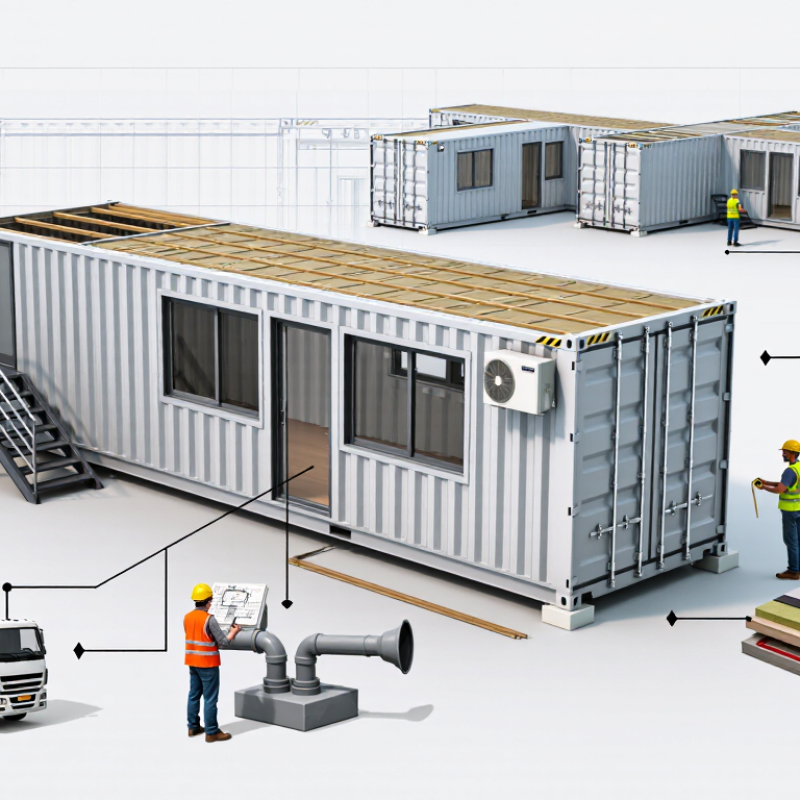
Demountable office containers are modular workspaces designed for assembly, disassembly, and relocation. Unlike a standard shipping container, many use a reusable steel frame with separate wall, roof, and floor panels. Bolted connections let crews take the unit apart, move it, and reassemble it on another prepared site. Inside, a typical unit may include a desk area, lighting, insulation, windows, and pre-routed electrical services. The exact fit-out varies. So does the level of comfort.
This design can suit temporary site offices or projects that need space in phases. McKinsey’s 2019 report, Modular Construction: From Projects to Products, says modular methods can shorten construction schedules by 20–50% in suitable projects. That figure covers modular construction broadly, not demountable office containers alone. Site access, foundation work, and utility connections still affect delivery time. The panel joints matter, too. Poor sealing can invite drafts or water ingress, and that is easy to underestimate.
Tips: Check panel thickness, connection details, insulation, and electrical routing before buying. Ask how units are dismantled and whether parts can be replaced. A quick inspection of seals and bolts is useful; a glossy rendering is not enough. There is no perfect layout. Reconsider the door and window positions against the actual site.
How Their Modular Design Supports Reuse and Relocation
Demountable office containers use bolted frames and separable wall, floor, and roof panels. This modular construction allows a unit to be taken apart without cutting apart its main structure. At a project site, crews can remove doors, windows, and interior fittings, then label each component for transport. Small details matter. A missing connector can slow reassembly.
For reuse, inspect the steel frame, panel edges, seals, and lifting points before and after each move. Replace damaged seals to help limit drafts and water entry. Electrical and plumbing connections should be disconnected and checked by qualified technicians. Not every component will last equally long. That is worth planning for.
Relocation is often practical when a site changes or temporary offices are no longer needed. A level base, clear access for lifting equipment, and a component inventory make the process more predictable. However, modular does not mean effortless: transport dimensions, crane access, and local site conditions can affect cost and schedule. I would also leave time for reassembly checks; rushed work can create gaps between panels or uneven doors. With routine maintenance and careful handling, reusable containers can serve at more than one location while reducing the need to rebuild the office shell each time.
Key Features to Compare When Choosing a Container
For buyers comparing China demountable office containers, check the frame, panels, joints, and site requirements—not just the quoted price. Ask for steel thickness, corrosion-protection details, and inspection records. Repeated lifting can expose weak welds or damaged coatings. Small details matter.
Compare insulation by its stated thermal performance, and ask whether the figure applies to the full wall assembly. Check window seals, roof drainage, ventilation, and condensation control; a warm panel alone cannot prevent damp corners. The 2024 Global Status Report for Buildings and Construction from UNEP and GlobalABC says buildings and construction account for 32% of global energy use. That makes operating efficiency worth checking, even for a compact office. Also compare floor load capacity, electrical provisions, fire-test documentation, and acoustic performance against your actual use.
Transport and reassembly deserve equal attention. Confirm container dimensions, lifting points, connection details, and whether replacement panels are available. The Modular Building Institute’s 2023 Permanent Modular Construction Annual Report put modular construction’s North American market share at 6.64% in 2022. That signals growing adoption, not guaranteed quality. Request drawings, test reports, and a written scope covering installation. I would still inspect a completed unit if possible; specifications can miss awkward door clearances or noisy joints.
How to Evaluate Chinese Manufacturers and Suppliers
China Best Demountable Office Containers for Sale?
How to Evaluate Chinese Manufacturers and Suppliers
A strong supplier should prove quality with records, not polished factory photos. Ask for drawings, material specifications, weld inspection records, and a sample bill of materials. Check that the delivered container matches the approved drawings, including corner fittings, panel thickness, door clearances, and roof drainage. McKinsey’s 2019 modular-construction analysis estimates that modular methods can shorten project schedules by 20–50%, depending on project conditions. That is a sector-level range, not a promise for one supplier. Use it as context.
Request photos or a live video walkthrough of cutting, welding, coating, and final inspection. Ask how the supplier checks coating thickness and roof-water tightness, and request dated inspection results. Details matter. Confirm insulation performance, fire-test documentation, and wind and snow design loads against your project specifications. The World Bank’s 2023 Logistics Performance Index ranked China 19th, with a score of 3.7 out of 5; this country-level rating cannot predict one factory’s delivery performance. Ask for recent export references, packing plans, production milestones, and a written process for reporting defects. I would still hesitate if answers arrive quickly but documents do not. That gap deserves a closer look.
China Best Demountable Office Containers for Sale? How to Evaluate Manufacturers and Suppliers
ISO Series 1 container nominal external lengths provide a useful transport-envelope reference when reviewing supplier designs.
ISO 668 nominal lengths: 20 ft = 6,058 mm; 40 ft = 12,192 mm. Demountable office containers may be shipped in separate components, so ask suppliers for both assembled and packed dimensions, drawings, and transport details. These reference values do not certify a product as ISO-compliant.
What to Consider Before Purchase, Delivery, and Installation
Before buying demountable office containers from China, confirm the actual usable floor area, internal height, insulation, fire-performance documents, and electrical specifications. A drawing can hide awkward details, such as a door that clashes with a desk or a cable entry positioned on the wrong wall. Ask for dimensioned plans, material descriptions, and photographs of comparable completed units. Check whether the quoted price includes stairs, ramps, lighting, and connection points. Small omissions add up.
Delivery needs equal attention. Share the site address, access-road width, overhead clearance, unloading space, and ground conditions before confirming transport costs. A container may fit the site but still be impossible to unload safely. McKinsey’s 2019 report, Modular construction: From projects to products, says modular methods can reduce project schedules by 20–50%; that is a potential, not a promise for every office installation. Dodge Data & Analytics’ 2019 SmartMarket Report found that many surveyed contractors associated prefabrication with improved productivity and schedules. Results depend on planning. Before installation, verify the foundation level, drainage, utility locations, and lifting arrangements with qualified local professionals. Leave time for checks. I would not treat delivery day as the day to discover a missing access route or an uneven base.
FAQS
Ask for drawings, material specifications, weld inspection records, and a sample bill of materials. Request dated inspection results, too. Photos alone are not enough.
Compare corner fittings, panel thickness, door clearances, and roof drainage with the approved plans. Ask for a live video walkthrough of production and final inspection. Check the details.
Ask how coating thickness and roof-water tightness are tested. Confirm insulation details, fire-test documentation, and wind and snow design loads against your project requirements.
No. One industry analysis estimated schedule reductions of 20–50%, depending on project conditions. Treat that range as context, not a supplier’s promise.
Check usable floor area, internal height, insulation, fire documentation, and electrical specifications. Review dimensioned plans for practical issues, such as a door hitting a desk or a cable entry on the wrong wall.
Confirm whether stairs, ramps, lighting, and connection points are included. Small omissions can add up. Ask for comparable completed-unit photos.
Share the site address, access-road width, overhead clearance, unloading space, and ground conditions before confirming transport costs. A container may fit but still be difficult to unload safely.
Have qualified local professionals verify foundation level, drainage, utility locations, and lifting arrangements. Allow time for these checks. I would not leave them until delivery day.
Conclusion
Demountable Office Containers provide a flexible workspace solution that can be assembled, taken apart, and relocated as project needs change. Their modular design supports reuse across different sites, helping businesses adapt office space without committing to a permanent structure. When comparing options, consider the container’s dimensions, layout, materials, insulation, ventilation, electrical provisions, and ease of assembly. These features affect comfort, durability, transport, and suitability for the intended working environment.
When evaluating Chinese manufacturers and suppliers, review their production capabilities, product specifications, quality-control processes, communication, and ability to provide clear documentation. Before purchasing, confirm the site requirements, customization details, delivery arrangements, access for unloading, installation responsibilities, and any preparation needed at the destination. Careful planning and comparison can help buyers select a practical container that fits their budget, schedule, and workspace requirements.