Featured Prefabricated Hotel & Hospitality Modules
Precision-Engineered Off-Site Architectural Solutions Exported Directly to Brazil's Commercial Real Estate & Hospitality Sectors
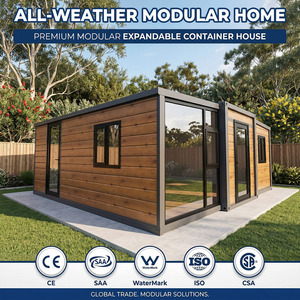
Expandable Luxury Modular Hotel Villa & Resort Pod
Get a Quote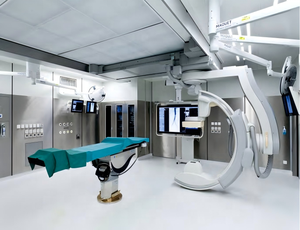
Modular Cleanroom & Medical Station Container Unit
Get a Quote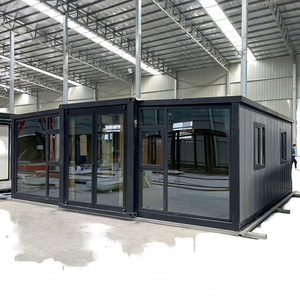
Modular Dining Pod & Luxury Container Restaurant
Get a Quote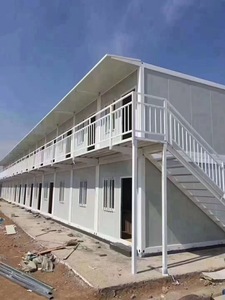
Two-Story Modular Hotel Suite & Admin Accommodation
Get a Quote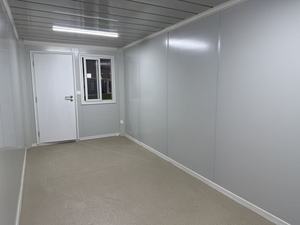
Z-Foldable Rapid-Deploy Logistics & Staff Module
Get a Quote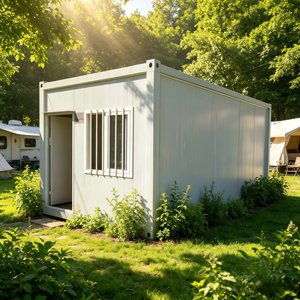
Custom Commercial Mobile Lounge & Service Module
Get a Quote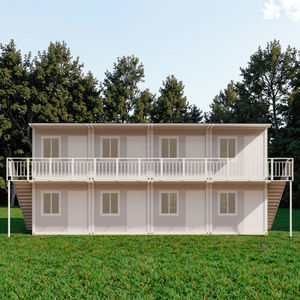
Multi-Purpose Modular Assembly & Conference Hall
Get a Quote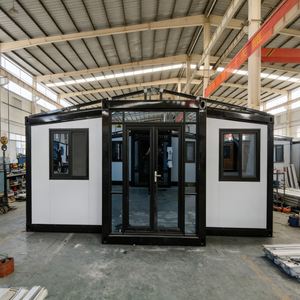
Steel-Framed Modern Eco-Resort Suite Unit
Get a Quote1. Technical Engineering Analysis: Modular Hospitality Construction for Brazil
The Latin American hospitality sector is undergoing a structural transition toward industrial off-site manufacturing. In Brazil, developers face unique macroeconomic and environmental variables: fluctuating labor costs, high logistics expenses across regional corridors, rigorous municipal permitting, and extreme climatic variances ranging from humid tropical environments in the Amazon basin and Nordeste coastline to temperate zones in the South. Importing prefabricated hotel modules from world-class manufacturing hubs like Turkey offers Brazilian developers a decisive advantage in capital deployment, thermal efficiency, and schedule predictability.
Prefabricated volumetric hotel modules represent the pinnacle of modern methods of construction (MMC). Rather than building sequentially on-site—a process prone to weather delays, material waste, and labor shortages—steel-framed volumetric modules are fully manufactured, structurally wired, plumbed, and finished inside controlled factory environments. By the time modules arrive at Brazilian entry ports such as Santos, Paranaguá, or Suape, over 80% to 90% of architectural finishing work is complete. This off-site approach compresses construction timelines by up to 70%, allowing hotel operators in Rio de Janeiro, São Paulo, Florianópolis, and Salvador to open doors and generate RevPAR (Revenue Per Available Room) significantly faster than traditional concrete block masonry allows.
Information Gain Metric: Transitioning from conventional wet-construction methods to ISO-certified off-site prefabricated hotel modules reduces total project risk profiles by eliminating on-site weather dependency, minimizing raw material wastage to under 2%, and guaranteeing structural compliance with Brazilian ABNT/NBR standards before shipment.
Structural Compliance with Brazilian Standards (ABNT NBR)
To successfully deploy prefabricated hotel modules in Brazil, technical compliance with the Associação Brasileira de Normas Técnicas (ABNT) is mandatory. Foreign suppliers must engineer products that seamlessly align with domestic structural, acoustic, and thermal performance frameworks:
- ABNT NBR 15575 (Edificações Habitacionais – Desempenho): Dictates strict structural integrity, fire safety, acoustic privacy between adjacent guest rooms, and thermal performance benchmarks across Brazil's eight bioclimatic zones. Modular hotel designs incorporate multi-layer drywall systems, rock wool acoustic insulation, and thermal break framing to satisfy NBR 15575 Class S requirements.
- ABNT NBR 14762 & NBR 6349 (Steel Framing Systems): Light Gauge Steel (LGS) and structural steel container frames must be cold-formed from high-yield galvanized steel (minimum Z275 zinc coating or AZ150 Galvalume) to prevent structural corrosion caused by elevated humidity and coastal saline atmosphere.
- ABNT NBR 6123 (Wind Loads on Structures): Coastal developments in Northeastern Brazil (Bahia, Ceará, Pernambuco) require modular hotel modules designed to withstand basic wind speeds ($V_0$) exceeding 45 to 50 meters per second, complete with engineered anchor bolt detailing for concrete slab connections.
2. Thermal, Acoustic, and Anti-Corrosion Material Engineering
Brazil’s diverse tropical climates present rigorous challenges to building envelopes. Heat ingress, high relative humidity, and salt fog spray can rapidly degrade inferior building materials. Precision-manufactured hotel modules utilize targeted material science solutions to maintain high guest comfort while minimizing lifecycle maintenance costs.
Thermal Envelope Optimization: The thermal performance of modular guest rooms depends on sandwich panel insulation cores and ventilated facade cladding systems. Continuous polyurethane (PU/PIR) or high-density mineral wool insulation boards (thicknesses from 75mm to 150mm) achieve ultra-low thermal conductivity ($\lambda \le 0.022 \text{ W/m}\cdot\text{K}$). This minimizes internal heat transfer during peak Brazilian summer months, drastically cutting HVAC power consumption for hotel operators.
Acoustic Isolation Engineering: Hotel guest satisfaction hinges on room-to-room sound isolation. Prefabex modules utilize double-stud wall configurations with acoustic decoupling air gaps, resilient channels, and dense mineral wool insulation ($100 \text{ kg/m}^3$). This construction delivers Airborne Sound Insulation values ($R_w$) exceeding 52 dB, effortlessly passing NBR 15575 acoustic requirements and shielding guests from exterior corridor or adjacent room noise.
Anti-Corrosion Surface Treatment: For coastal pousadas and beach resorts, structural steel elements are treated with multi-stage ISO 12944 C4/C5 rated protective coatings. Chassis beams undergo shot blasting to Sa 2.5 purity, followed by zinc-rich epoxy primers and aliphatic polyurethane topcoats resistant to intense UV exposure and coastal saline degradation.
3. Localized Application Scenarios Across Brazil
Modular hotel modules can be configured to serve diverse market segments across Brazil’s vast geography. Below are five strategic application scenarios where prefabricated modular construction delivers superior ROI:
Eco-Lodges & Pousadas in Protected Zones
Deployment in eco-sensitive zones like Fernando de Noronha, Jalapão, and the Pantanal. Pre-assembled modules require zero heavy wet-concrete work on site, drastically reducing ecological footprint and site disruption while adhering to ICMBio environmental guidelines.
Urban Boutique Hotels in São Paulo & Rio
In dense metropolitan centers where street access is restricted and traditional construction causes severe traffic disruption, volumetric modular pods are crane-hoisted directly into place during off-peak hours, shrinking site logistics overhead by 80%.
Agro-Industrial & Mining Executive Accommodation
Providing executive-grade living quarters for engineers and management personnel in remote regions such as Mato Grosso, Pará, and Minas Gerais. Modules include en-suite restrooms, workspace, and HVAC systems designed for extreme remote durability.
Modular Clinics & Medical Facilities
Rapid deployment of medical containment rooms, cleanrooms, and field clinics in regional municipalities. Fully compliant with ISO Class 100 cleanroom standards, these units feature pre-installed medical gas lines and antimicrobial wall cladding.
Modular Educational & Corporate Campuses
Expandable classrooms, multi-purpose conference halls, and training modules designed for quick assembly. Easily combined vertically or horizontally to create expansive educational spaces in expanding urban zones.
4. Localized Market & Development Trends in Brazil
The Brazilian modular building sector is expanding at an unprecedented Compound Annual Growth Rate (CAGR). Driven by shift in investment trends and evolving developer expectations, several key drivers are accelerating modular adoption across Latin America:
A. ESG Integration & Decarbonization in Commercial Real Estate
Institutional investors and real estate funds (FIIs - Fondos de Investimento Imobiliário) in Brazil prioritize ESG (Environmental, Social, and Governance) parameters. Traditional construction accounts for over 30% of solid waste in Brazilian municipalities. Off-site modular manufacturing virtually eliminates jobsite material waste, reduces embodied carbon through optimized steel recycling, and minimizes on-site water consumption during construction.
B. Financial Cost of Capital & Rapid RevPAR Acceleration
With Brazilian interest rates (Taxa Selic) creating high capital carrying costs for commercial real estate loans, extended construction timelines significantly erode internal rate of return (IRR). A 200-room modular hotel project that opens 12 to 14 months earlier than a concrete equivalent allows developers to begin generating room revenue immediately, servicing debt early and reducing total financial risk.
C. Modular Modernization of Regional Airports & Infra-Tourism
Following recent regional airport concessions across Brazil, tourist destinations in the Northeast and Interior are receiving increased flight connections. To rapidly match the surge in tourist volume, international hotel chains and regional boutique operators rely on imported modular suites that can be delivered via ocean freight container units and assembled within weeks of foundation completion.
5. Enterprise Core Competencies & Global Export Infrastructure
As a leading global manufacturer based in Istanbul, Turkey—a internationally recognized hub for high-grade structural steel fabrication—Prefabex brings over 20 years of technical excellence to Brazilian procurement teams. Our manufacturing capabilities bridge high-precision European engineering with cost-effective international export operations.
ISO-Certified Factory Production
All modules are manufactured under strict ISO 9001:2015, ISO 14001, and ISO 45001 management systems, guaranteeing structural precision, material traceability, and standardized quality.
In-House BIM & MEP Engineering
Our multidisciplinary engineering teams provide full 3D Building Information Modeling (BIM), structural calculations, and pre-integrated Mechanical, Electrical, & Plumbing (MEP) schematics.
Optimized Ocean Logistics to South America
Flat-pack and demountable module options are specifically engineered to fit standard 40ft High Cube sea containers, reducing international ocean freight costs by up to 60%.
Turnkey Interior Finishing Options
Modules arrive equipped with pre-installed wall paneling, sanitary fixtures, floor vinyl/tiles, LED illumination, and door systems tailored to luxury or commercial hospitality standards.
On-Site Technical Supervision & Assembly
Prefabex sends experienced site supervisors and structural engineers directly to Brazilian job sites to guide local construction crews through foundation anchoring, stacking, and sealing.
Scalable Modular Architectural Design
From single-story detached luxury eco-villas to 4-story stacked hotel blocks, our systems offer infinite layout modularity, balcony attachments, and custom facade integration.
6. Frequently Asked Questions (FAQ) for Brazilian Importers
Procuring prefabricated hotel modules from international manufacturers requires clear regulatory and operational clarity. Below are detailed answers to the most common questions raised by Brazilian developers, architects, and procurement teams:
Ready to Accelerate Your Hospitality Development in Brazil?
Partner with a trusted international manufacturer delivering ISO-certified modular hotel suites, eco-resort pods, and structural steel solutions direct to Brazilian ports.
Get a Quote