Engineering Excellence for Pakistan's Growing Industrial Infrastructure
As Pakistan undergoes massive economic transformation—driven by key infrastructure investments under the China-Pakistan Economic Corridor (CPEC), Special Economic Zones (SEZs) like Rashakai, Allama Iqbal Industrial City Faisalabad, and the expansion of maritime hubs around Port Qasim and Gwadar—the demand for rapid, durable, and seismically robust industrial buildings has reached an unprecedented peak.
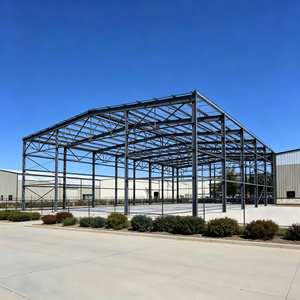
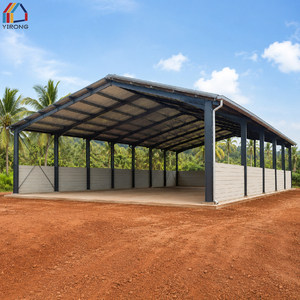
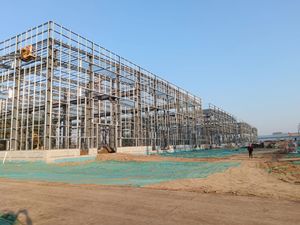
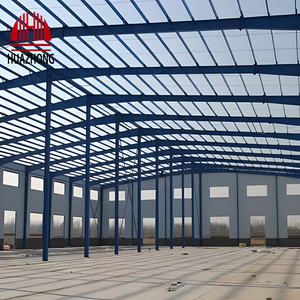
Traditional Reinforced Cement Concrete (RCC) structures are increasingly proving inefficient for modern industrial applications in Pakistan due to prolonged construction timelines, vulnerability to high seismic activity (such as Zone 2B in Lahore/Islamabad and Zone 4 in Quetta), high material wastage, and strict internal column limitations. **Portal Frame Steel Buildings** have emerged as the definitive structural solution, providing column-free clear spans exceeding 60 meters, rapid assembly schedules, and superior lifecycle ROI.
Information Gain Insight: Modern portal frame structural design incorporates tapered rigid steel frames (variable moment of inertia I-sections) that match internal stress distribution precisely. By optimizing flange and web thickness based on finite element structural analysis (FEA), pre-engineered portal frames reduce overall steel consumption by 25–35% compared to conventional heavy H-beam designs while maintaining structural compliance under Building Code of Pakistan (BCP 2007) and AISC 360-16 standards.
Why International Direct Procurement from Global Manufacturers Benefits Pakistani Developers
Procuring engineering-certified pre-engineered portal frame steel structures directly from global direct-manufacturing suppliers offers distinct advantages over local site-fabricated steel workshops:
Automated SAW Welding
Factory submerged arc welding (SAW) yields 100% full-penetration structural joints inspected via Ultrasonic Testing (UT), replacing manual site welds prone to micro-cracking.
Hot-Dip Galvanizing & C5 Protection
Structural components are treated with HDG (ISO 1461) or multi-coat epoxy systems engineered to resist high humidity and marine salinity around coastal Karachi & Gwadar.
Precision Bolt-Assembly Onsite
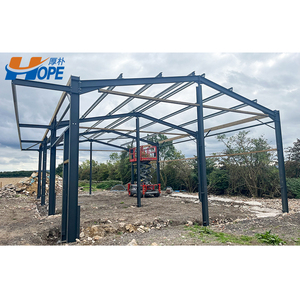
All members are pre-punched, numbered, and cut to millimeter tolerances. On-site installation requires zero field welding, drastically cutting erection labor costs in Pakistan.
Technical Deep-Dive: Portal Frame Engineering Standards for Pakistan
Designing industrial steel structures for Pakistan requires explicit engineering customization due to extreme geographic variations—ranging from the humid, salt-laden coastal conditions of Sindh to the intense thermal fluctuations of Punjab (where ambient summer temperatures hit 48°C) and the high-seismic mountainous terrains of KPK and Balochistan.
1. Seismic Zone Compliance (BCP-2007 / UBC-97)
Pakistan is divided into five seismic zones (Zone 1, 2A, 2B, 3, and 4). Industrial hubs like Quetta (Zone 4) and Peshawar/Islamabad (Zone 2B/3) mandate elevated ductility standards. Our portal frame structures are engineered with dynamic response spectrum analysis according to AISC 341 Seismic Provisions for Structural Steel Buildings. Ductile moment-resisting portal frames are designed to dissipate energy effectively through controlled plastic hinge formation at rafter-column knee joints, preventing sudden structural collapse.
2. Coastal Corrosion Mitigation (C4 & C5 Marine Environments)
Projects located near Port Qasim, Korangi Creek, or Gwadar Port suffer aggressive atmospheric corrosion caused by airborne chlorides and high humidity. Standard red-oxide primer fails within 24 to 36 months. We engineer customized surface treatment systems:
- Sa 2.5 Shot Blasting: Pre-cleaning steel surfaces to remove all mill scale and rust.
- Hot-Dip Galvanizing (HDG): Zinc coating of ≥ 85 μm thickness compliant with ASTM A123 / ISO 1461, ensuring 30+ years of maintenance-free lifespan in marine exposure zones.
- Polyurethane / Epoxy Systems: High-build zinc-rich epoxy primer (60μm) + epoxy intermediate (100μm) + aliphatic polyurethane topcoat (50μm) for total C5 marine grade defense.
3. Thermal Control & Energy Efficiency for Extreme Summers
In industrial cities such as Faisalabad, Multan, and Gujranwala, ambient indoor heat inside uninsulated metal sheds can render working conditions intolerable and degrade stored inventory. We integrate high-performance thermal envelope systems featuring Sandwich Panels with Polyisocyanurate (PIR) or Rockwool core (thickness: 50mm to 150mm; thermal conductivity λ ≤ 0.022 W/m·K). These systems reduce indoor HVAC cooling loads by up to 40%.
| Structural Parameter |
Pre-Engineered Portal Frame |
Conventional Steel Truss |
Reinforced Concrete (RCC) |
| Structural Weight / m² |
22 – 38 kg/m² Optimized |
45 – 65 kg/m² |
180 – 250 kg/m² (Heavy) |
| Construction Speed (10,000 m²) |
6 – 8 Weeks Fast Track |
16 – 20 Weeks |
36 – 52 Weeks |
| Clear-Span Capability |
Up to 70m Without Columns |
Up to 30m Maximum |
Restricted (6m - 12m grid) |
| Seismic Performance |
High Ductility & Flexibility |
Moderate Rigidity |
Brittle Failure Risk |
| Foundation Load Requirement |
Light Isolated Footings |
Medium Deep Footings |
Heavy Raft / Piles Required |
| Relocation / Expansion |
100% Demountable & Modular |
Difficult Modification |
Permanent (Demolition needed) |
Localized Application Scenarios across Pakistan Key Economic Hubs
Our portal frame steel building systems are specifically configured to match the unique operational needs of various industrial sectors across Pakistan’s key economic corridors:
Karachi & Coastal Hubs (Port Qasim / Korangi / Hub)
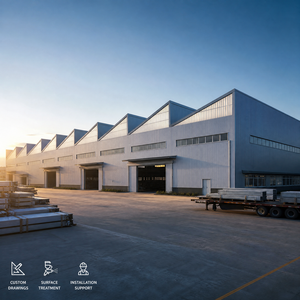
Heavy Industrial Manufacturing & Crane Warehouses
Engineered to support heavy 10-ton to 50-ton Overhead Electric Traveling (EOT) cranes with custom bracketed columns. Features C5-M marine grade anti-corrosion coatings to withstand high salt fog atmosphere along the Arabian Sea coastline.
Faisalabad & Sialkot Export Zones
High-Cube Textile & Garment Processing Facilities
Large clear-span portal structures (up to 45m column-free width) maximizing floor space for automated weaving, spinning, and garment cutting lines. Integrates continuous ridge ventilators and skylight panels for natural day-lighting.
Multan, Sahiwal & Upper Punjab
Temperature-Controlled Agri-Cold Storage & Food Processing
Configured with airtight PIR sandwich panels (R-value up to 30) for fruit processing, grain storage, and pharmaceutical logistics. Resists high summer temperatures reaching 48°C with zero thermal bridging.
Gwadar & Northern CPEC Corridor
Intermodal Logistics Depots & Dry Port Warehouses
Heavy-duty portal frames designed for high wind load velocities (up to 160 km/h) and severe dust storms. Modular bolt-together design allows rapid field assembly in remote strategic transport nodes.
Manufacturing Authority, Quality Control & Global Supply Chain
As an established global manufacturer and exporter, our engineering and production workflow adheres to the strictest international standardizations. We maintain end-to-end control over structural modeling, raw material sourcing, automated fabrication, and international shipping logistics.
1. Advanced 3D BIM & TEKLA Detailing
Every portal frame project undergoes comprehensive 3D modeling using Tekla Structures software. This allows precise collision checking for mechanical, electrical, and plumbing (MEP) openings, crane runaway beams, and rainwater drainage systems before steel fabrication even commences. Pakistani clients receive complete fabrication drawings, anchor bolt layouts, and 3D erection guides.
2. Raw Material Traceability & Metallurgical Standards
We source primary structural steel plates and coils strictly from ISO-certified steel mills with Mill Test Certificates (MTC) compliant with EN 10204 3.1. Standard structural steel grades utilized include:
- Q355B / Q355D (Equivalent to ASTM A572 Grade 50 / BS EN 10025 S355): High-yield strength steel for primary rigid columns and rafters.
- Q235B (Equivalent to ASTM A36 / BS EN 10025 S275): Secondary bracing, purlins, and wall girts.
- Cold-Formed High-Tensile Galvanized Purlins (Z275 / 275 g/m² Zinc Coating): Standard C and Z purlins for long-term rust protection.
3. Freight Optimization & Shipping to Karachi Port / Port Qasim
Steel buildings are heavy and bulky. Unoptimized shipping drastically increases procurement costs. Our specialized packaging protocol organizes structural members into bundled stacks using protective rubber spacers and steel strapping, tailored specifically for 40ft High Cube (40'HQ) or Open Top containers. This guarantees damage-free arrival and minimizes ocean freight charges per ton delivered to Karachi Port Trust (KPT) or Port Qasim Terminal (DP World Karachi).
Frequently Asked Questions (FAQ) for Purchasing Steel Buildings in Pakistan
To assist Pakistani procurement managers, structural consultants, and project developers, our engineering desk has compiled answers to common technical and commercial queries regarding importing and erecting portal frame steel buildings.
Q:
What are the HS Codes and import duty considerations for steel structure buildings in Pakistan?
Pre-engineered steel structures generally fall under HS Code 9406.9010 (Prefabricated Buildings of Steel). Import duties, Sales Tax, and Advance Income Tax are calculated based on FBR (Federal Board of Revenue) customs tariffs. We provide full commercial invoices, packing lists, Mill Test Certificates, and Certificates of Origin to ensure smooth customs clearance at Karachi ports.
Q:
How do portal frame structures handle wind loads in coastal areas like Karachi and Gwadar?
Our structural designs strictly adhere to ASCE 7-16 / BCP 2007 wind loading criteria. Coastal designs incorporate dynamic wind pressures corresponding to wind speeds of up to 160–180 km/h, utilizing high-tensile flange bracing, cable bracing, and reinforced column-to-foundation anchor bolt embedments.
Q:
Can overhead traveling cranes (EOT Cranes) be integrated directly into the portal frame?
Yes. Rafters and columns can be engineered with heavy structural crane brackets, runway beams, and surge trusses capable of supporting 5-ton, 10-ton, 20-ton, or 50-ton EOT cranes. Wheel load dynamics and fatigue checks are calculated per AISC design guides.
Q:
What type of foundation design is required for alluvial soil in Punjab and Sindh?
Because portal frames transmit lighter total dead loads than concrete RCC structures, isolated shallow footings connected with tie-beams are typically sufficient for standard soils. In areas with low bearing capacity (such as soft alluvial clay along the Indus River basin), pile caps or raft foundations are utilized. We provide foundation reaction loads (axial forces, shears, and moments) to your local civil consultant.
Q:
What is the typical manufacturing and shipping lead time to Pakistan?
Factory fabrication typically requires 3 to 4 weeks following final approval of Tekla 3D shop drawings. Ocean freight shipping from factory ports to Karachi (KPT or Port Qasim) takes approximately 14 to 22 days. Total turnaround from order placement to site delivery in Pakistan is usually within 45 to 60 days.
Q:
How do you guarantee long-term thermal insulation against 45°C+ summer heat?
We supply high-density Polyisocyanurate (PIR) or Polyurethane (PUF) sandwich roof and wall cladding panels with tongue-and-groove joint seals. Combined with double-layer aluminum foil insulation blankets and ridge ventilation systems, internal temperatures are kept significantly lower than ambient external heat.
Partner with a Global Leader in Portal Frame Steel Buildings
Whether you are developing a 50,000 sq.ft. textile warehouse in Faisalabad, an industrial processing facility in Karachi, or a cold storage depot in Multan, our engineering authority and direct-manufacturing capabilities deliver maximum structural integrity at optimized cost per ton.