Engineered Off-Site Infrastructure Solutions
Explore our exported portfolio of heavy-duty modular containers, prefabricated expansion units, expandable clinics, and multi-story educational spaces engineered to meet strict structural and thermal performance requirements.
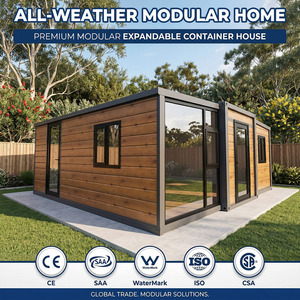
Container House Prefabricated Home Tiny Home Container Modular Mobile Home Villas Prefabricated Expandable House For Hotel
Send an Inquiry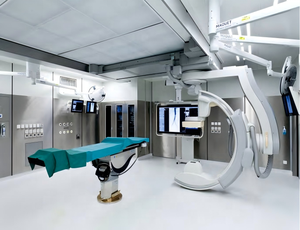
New Prefabricated Stationary Modular Stainless Steel Container Clinic Hospital Lab ISO Class 100 Clean Room System Fast Assembly
Send an Inquiry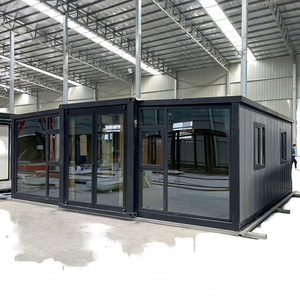
Affordable And Affordable Container Houses, Portable Prefabricated Micro Houses, Modular Luxury Container Restaurants
Send an Inquiry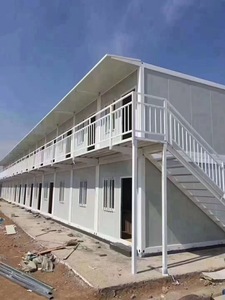
Quick Setup Two Story Modular Container House Portable Clinic Medical Room Double Floor Temporary Treatment Center
Send an Inquiry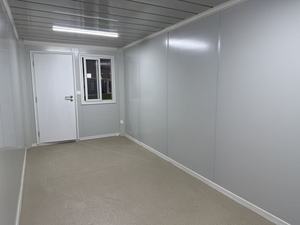
Budget-Friendly 440 Z-Foldable Container Unit Portable Site Office Temporary Storage Room Modular Prefab Mobile Cabin
Send an Inquiry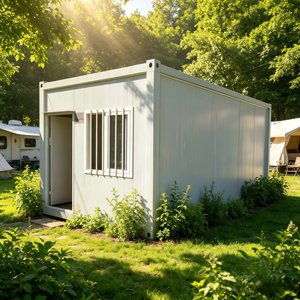
Customizable Modern Exterior Movable Container Clinic for Remote Area Healthcare and Mobile Medical Station Service
Send an Inquiry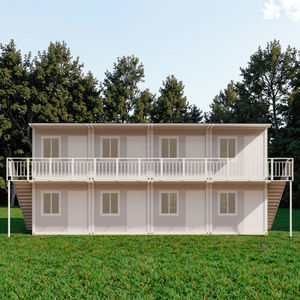
School Use Fast Assemble Container House Prefab Modular Classroom For Temporary Educational Space
Send an Inquiry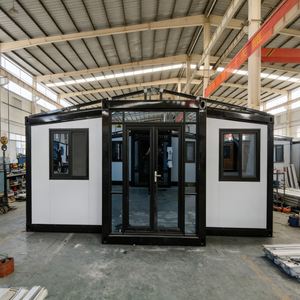
Steel Framed Expandable Prefabricated Container House Mobile Clinic with Modern Design and 1 Year Warranty
Send an InquiryNagoya Market Overview: Urban Planning & Educational Infrastructure Needs
The Greater Nagoya Metropolitan Area—encompassing Aichi, Gifu, and Mie Prefectures—represents Japan’s industrial and technological heartland. Home to globally recognized automotive, aerospace, and robotics clusters, Nagoya’s urban ecosystem demands highly agile infrastructure solutions. In recent years, local government authorities, private educational foundations, and technical institutes across Aichi Prefecture have faced dual pressures: accelerating school modernization initiatives under Japan's GIGA School Program while systematically upgrading aging educational facilities to satisfy non-negotiable seismic resilience criteria (Kenchiku Kijun-hō / Building Standards Act).
Traditionally, traditional reinforced concrete (RC) construction was the standard for Japanese school campuses. However, conventional on-site construction presents significant bottlenecks in dense urban districts like Nagoya’s Naka, Chikusa, and Meito wards. Protracted building schedules, labor scarcity in Japan's construction sector, heavy noise pollution, and severe spatial constraints surrounding active academic grounds have driven municipal procurement officers and private school boards to adopt modern off-site Modular Educational Buildings.
Information Gain Insight: Off-site volumetric prefabrication allows educational institutions in Nagoya to execute complex facility expansions or seismic swing-space replacements up to 70% faster than traditional on-site construction. By manufacturing cold-formed light-gauge steel (LGS) and structural container modules in ISO-certified factories, site disruption, dust, and acoustic disturbance on surrounding urban campuses are virtually eliminated.
Furthermore, Nagoya's geographical positioning along the Tokai coast exposes the region to humid subtropical summers, cold winter winds from the Suzuka Mountains, and elevated seismic activity associated with the Nankai Trough. Modular educational facility manufacturers and exporters servicing Aichi Prefecture must therefore deliver architectural systems that transcend basic temporary cabins. Modern modular classrooms, STEM laboratories, dormitories, and dining facilities imported into Nagoya require advanced thermal envelope design, specialized seismic damping, anti-corrosion exterior coatings, and strict compliance with Japanese Fire Service Act standards.
Engineering Rigor: Meeting Japan’s Strict Structural & Environmental Codes
Exporting modular structures to Japan demands an exceptional degree of engineering precision. Japan's Ministry of Land, Infrastructure, Transport and Tourism (MLIT) mandates that all semi-permanent and permanent academic structures withstand extreme natural phenomena. As an experienced global modular manufacturer, our exported building units are pre-engineered to align seamlessly with regional building regulations in Nagoya:
| Regulatory & Engineering Criteria | Japanese Standard / Local Requirement | Prefabex Off-Site Modular Specification |
|---|---|---|
| Seismic Resistance | Kenchiku Kijun-hō (Article 38/68 Compliance) | Heavy-duty cold-formed light gauge steel frame & rigid box-unit load distribution designed to absorb JMA Seismic Intensity Scale 7 displacement forces. |
| Wind Load Resilience | Basic Wind Speed (Vo) = 34–38 m/s (Typhoon Zone) | Aerodynamically optimized exterior profile, reinforced corner fittings, and heavy-duty anchor bolt connections certified for severe typhoon winds. |
| Thermal Performance | Zone 5 & Zone 6 Energy Conservation Standards | High-density Rockwool / Polyisocyanurate (PIR) insulation core (75mm–150mm), thermal break frame engineering, achieving low U-values (<0.35 W/m²K). |
| Fire Safety & Non-Combustibility | Fire Service Act / Non-combustible Certification | JIS-compliant non-combustible interior wall panels (silicate/cement board), fire-rated doors, and integrated automatic smoke extraction ducting. |
| Acoustic Insulation | JIS A 1419 Educational Acoustic Standard | Multi-layer acoustic dampening ceiling & wall assemblies achieving STC 48+ sound attenuation, ensuring quiet learning environments near main arterial roads. |
Advanced Materials and Structural Design
Our off-site modular educational units are constructed using galvanized structural steel frames (JIS G 3141 / EN 10346 equivalent) to prevent structural oxidation caused by Nagoya's coastal air humidity. Walls feature premium sandwich panel integration, utilizing high-density mineral wool or flame-retardant PIR insulation. This construction methodology creates a airtight building envelope that drastically lowers operational HVAC electricity consumption—a core priority for schools aiming for zero-emission and regional SDGs (Sustainable Development Goals) targets.
Localized Application Scenarios Across Aichi Prefecture
Our exported modular systems are versatile, serving diverse educational, municipal, and commercial training needs across Nagoya's urban districts and surrounding industrial cities like Toyota, Kariya, and Komaki.
Seismic Swing-Space Classrooms
When municipal K-12 schools in Nagoya City undergo structural seismic reinforcement, our fast-assembly flat-pack and stackable container units provide immediate, fully wired temporary classrooms on school grounds without interrupting academic schedules.
University Campus Expansion
Institutions in Nagoya’s university hub (Chikusa & Showa Wards) utilize two-story modular complexes for temporary faculty offices, post-graduate research laboratories, administrative suites, and student lounges during campus redevelopments.
Automotive & Tech Training Hubs
To support Aichi’s industrial belt, companies and vocational institutes erect modular cleanroom labs, robotics assembly classrooms, and technical workshops rapidly configured with heavy-duty anti-static flooring and high-load ceiling grids.
Emergency & Disaster Relief Facilities
Designed for rapid mobilization via the Port of Nagoya, our foldable Z-container units and expandable medical/classroom cabins serve as emergency evacuation centers, first-aid stations, and temporary community centers during natural disasters.
Student Dormitories & Accommodations
Multi-unit modular housing complexes equipped with private sanitary pods, soundproof interior partitions, and integrated MEP systems offer rapid student housing solutions for international scholars arriving in Greater Nagoya.
Modular School Cafeterias & Clinics
Hygiene-rated stainless steel container units and insulated modular dining halls allow educational administrators to install fully functional, easily sanitized food preparation facilities and student health centers on demand.
Enterprise Superiority: Why Nagoya Procurement Teams Choose Prefabex
As an international leader in off-site modular manufacturing with state-of-the-art production facilities headquartered in Turkey, Prefabex bridges global manufacturing efficiency with rigorous Japanese engineering compliance. Our streamlined EPC (Engineering, Procurement, and Construction) framework delivers key operational advantages for contractors, project managers, and school boards across the Nagoya market:
- Integrated In-House BIM & Structural Engineering: Our multidisciplinary engineering team utilizes advanced Tekla, FrameCAD, and SAP2000 structural modeling software to generate complete architectural, structural, and MEP documentation tailored to Japan's Building Standards Act.
- Controlled Factory Fabrication (ISO 9001 / 14001 / 45001): By shifting 90% of the building construction process to our automated manufacturing plant, material waste is reduced by up to 40%, quality control is maintained, and weather-related construction delays are eliminated.
- Efficient Shipping via Port of Nagoya: Our modular units are flat-packed or containerized to maximize ocean freight density. We coordinate direct maritime shipping routes into the Port of Nagoya (Meiko Terminal), streamlining customs clearance and last-mile transport throughout Aichi, Gifu, and Mie.
- Rapid Plug-and-Play Assembly: Prefabricated components are pre-fitted with electrical conduits, plumbing connections, fire suppression sleeves, and floor coverings before dispatch. On-site installation requires minimal labor, enabling quick assembly within weeks rather than months.
- Turnkey Lifecycle Value: Built with high-strength galvanized steel frames and corrosion-resistant panel finishes, our modular buildings offer a design life of over 30 to 50 years, with high residual value and full relocation flexibility.
Frequently Asked Questions (Nagoya Market Procurement FAQ)
Detailed answers to technical, legal, and operational inquiries commonly raised by Japanese facility managers, general contractors, and educational administrators in Aichi Prefecture.
Can Prefabex modular educational buildings pass local building permits in Nagoya City?
How do your modular classrooms withstand Nagoya’s hot, humid summers and winter winds?
What is the delivery timeline from factory order to arrival at the Port of Nagoya?
Are these modular educational spaces suitable for long-term (permanent) use?
Can the interior layout be customized for specialized STEM or computer labs?
How is foundation preparation handled on site in Aichi Prefecture?
Off-Site Modular Implementation Roadmap for Educational Projects
To ensure flawless execution from initial layout concepts to final campus handover in Nagoya, Prefabex operates under a structured 5-phase project management framework:
1. Consultation & Design
Architectural space planning, Japanese building code review, climate optimization, and 3D BIM structural modeling tailored to client site dimensions.
2. Engineering & Approval
Generation of comprehensive engineering packages, structural seismic calculations, and material datasheets for local municipal permit submission.
3. ISO Factory Fabrication
Automated steel roll-forming, panel production, MEP pre-installation, and strict quality control inspections under ISO 9001 quality standards.
4. Export & Logistics
Flat-pack packaging, export customs documentation, ocean freight management, and scheduled port clearance through the Port of Nagoya.
5. Assembly & Handover
On-site crane positioning, structural bolting, weatherproofing joint seals, utility interconnection, and final safety inspection for occupancy.
Ready to Expand Your Educational Campus in Greater Nagoya?
Partner with a trusted global manufacturer. Connect with our modular engineering team today for technical datasheets, CAD drawings, budget estimations, and custom project consultations tailored to Aichi Prefecture’s building standards.
Send an Inquiry