Engineering Product Catalog: Seoul Commercial & Industrial Solutions
Certified modular steel frame assemblies engineered for rapid deployment, strict compliance with South Korea’s KBC specifications, and climate-adaptive insulation performance.
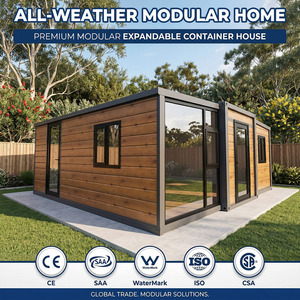
Modular Prefabricated Container Villa & Hotel System
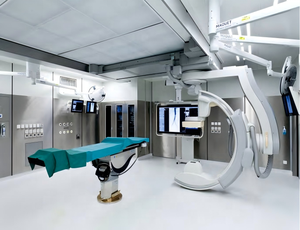
ISO Class 100 Modular Stainless Steel Cleanroom Clinic
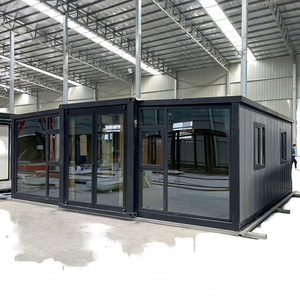
Modular Luxury Commercial Container Buildings & Dining Units
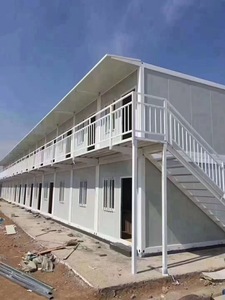
Two-Story Modular Heavy Steel Emergency Treatment Center
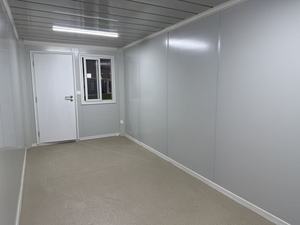
Z-Foldable Heavy Steel Site Office & Storage Unit
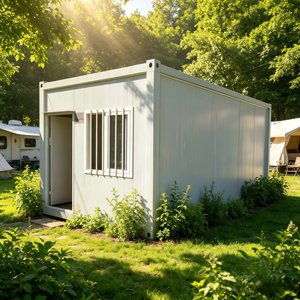
Customizable Heavy Frame Mobile Medical Station Unit
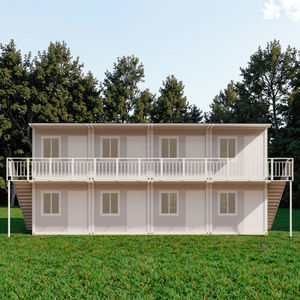
Modular Prefabricated Educational & Classroom Facilities
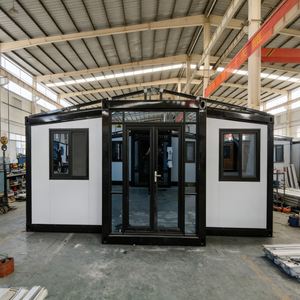
Steel Framed Dual-Wing Expandable Prefabricated Building
Engineering White Paper: Heavy Steel Frame Building Systems in Seoul's Urban & Industrial Ecosystem
The Seoul Metropolitan Area—encompassing Seoul, Incheon, and Gyeonggi Province—represents one of the world's most densely populated and technologically sophisticated built environments. As urban real estate values escalate and municipal sustainability mandates tighten, traditional reinforced concrete construction faces severe operational friction, including prolonged construction schedules, noise and dust restrictions, high carbon footprints, and severe labor constraints. As a premier global manufacturer and direct exporter of Heavy Steel Frame Buildings, our engineering division provides pre-engineered structural steel systems specifically calculated to overcome the structural, environmental, and regulatory challenges of South Korea’s construction landscape.
1. Structural Metallurgical Standards & Seismic Resilience in South Korea
South Korea’s geographical positioning near active tectonic fault lines across the East Sea and Yellow Sea mandates stringent seismic performance calculations. Heavy steel frame structures exported to the Seoul market utilize premium-grade structural steel conforming to international standards (such as GB/T 1591 Q355B/Q460, ASTM A572 Grade 50, or JIS G3101 SS400/SM490), perfectly aligned with South Korea's KS D 3504 and KS D 3515 material requirements.
Our heavy steel frame configurations feature Moment-Resisting Frames (MRFs) and Concentrically/Eccentrically Braced Frames (CBFs/EBFs) engineered to absorb seismic energy through controlled inelastic deformation. During high-magnitude seismic events (up to 7.0 Mw), the ductile properties of our structural steel prevent brittle joint failure. Structural connections are pre-drilled with high-precision CNC machinery to accommodate high-strength friction-grip (HSFG) bolts (Grade 10.9S), ensuring dynamic load distribution and zero structural displacement under cyclic shear loading.
| Performance Metric | Heavy Steel Frame System | Light Gauge Steel (LGS) | Reinforced Concrete (RC) |
|---|---|---|---|
| Structural Load Bearing Capacity | Extreme (Multi-Storey & Heavy Crane Loads) | Moderate (1-3 Storeys Low Load) | High (Heavy Self-Weight Load) |
| Seismic Ductility & Drift Ratio | Superior (KBC Seismic Zone 1 Compliant) | Moderate Flexible Resilience | Brittle Failure Risk if Unreinforced |
| Construction Speed (10,000 m²) | 45 - 60 Days On-Site Erection | 60 - 90 Days On-Site Erection | 180 - 240 Days On-Site Construction |
| Thermal Envelope Efficiency | U-Value ≤ 0.15 W/m²K (Custom Sandwich Panels) | Requires Layered Drywall Insulation | High Thermal Bridging Risk |
| Recyclability & Sustainability | 98% Recyclable Steel (G-SEED Compliant) | 90% Recyclable Steel | Low Recyclability / High Demolition Waste |
2. Thermal Envelope Performance for Extreme Seoul Microclimates
Seoul experiences extreme seasonal microclimates, ranging from severe freezing conditions in winter (-15°C) driven by Siberian anticyclones, to hot, humid summers (+35°C with heavy monsoon precipitation). Achieving thermal equilibrium without inflated HVAC operational expenditure requires advanced architectural physics integrated into the heavy steel framework.
Our exported heavy steel building envelopes utilize high-density Polyisocyanurate (PIR) and Rockwool core sandwich panel systems (density 100 kg/m³ - 140 kg/m³ for Rockwool), equipped with structural thermal break membranes. These structural insulated wall and roof panels eliminate thermal bridging across steel column-to-beam intersections. With thermal transmittance values ($U$-values) reaching down to $0.15 \text{ W/m}^2\text{K}$, our building systems effortlessly satisfy South Korea's strict Energy Savings Design Standards for Buildings (Ministry of Land, Infrastructure and Transport Notice).
3. Localized Application Scenarios Across Greater Seoul
The versatile engineering of heavy structural steel allows tailored deployment across diverse commercial, industrial, and civic applications within the Seoul metropolitan perimeter:
Urban Infill & Gangnam Commercial Retrofits
High-density infill projects in commercial districts like Gangnam, Mapo, and Yeouido demand minimal site disturbance. Heavy steel modular frames enable vertical extensions and rapid structural framing without disturbing adjacent properties or obstructing urban traffic logistics.
Incheon & Gyeonggi Smart Logistics Depots
Along the critical Incheon International Airport and Busan Port logistics corridors, clear-span heavy steel structures provide large column-free space (up to 45 meters unobstructed span) capable of supporting overhead bridge cranes, Automated Storage and Retrieval Systems (ASRS), and multi-tiered logistics platforms.
Semiconductor & High-Tech Cleanrooms
Supporting South Korea's world-leading semiconductor hubs in Suwon, Yongin, and Pyeongtaek, our structural steel frameworks feature low-vibration tolerance designs essential for micro-chip fabrication lines and ISO Class 100 cleanroom modular clinic enclosures.
4. Local Development Trends: Sustainability & Green Building (G-SEED) Compliance
South Korea’s national pledge to achieve carbon neutrality by 2050 has transformed municipal development policies. The Seoul Metropolitan Government now incentivizes structural systems that align with the G-SEED (Green Standard for Energy and Environmental Design) certification scheme.
Heavy steel frame construction provides substantial E-E-A-T (Experience, Expertise, Authoritativeness, and Trustworthiness) metrics in environmental validation. Steel utilized in our manufacturing process possesses a recyclability rating exceeding 98%. Furthermore, off-site pre-engineering eliminates up to 75% of site construction waste, reduces ambient noise levels to below 55 dB during erection, and significantly lowers embodied carbon compared to energy-intensive cement manufacturing processes. Our buildings easily integrate solar photovoltaic mounting frameworks, rainwater harvesting roof profiles, and high-performance smart HVAC ducts.
5. Export Logistics, Port Routing, and On-Site Installation Oversight
Direct export of heavy structural steel to South Korea demands meticulous supply chain planning and logistics mastery. From our primary production hub, structural steel members are pre-assembled, match-marked, and sea-freighted directly to key South Korean entry ports including Incheon Port (serving the Seoul metropolitan north/west) and Pyeongtaek Port or Busan Port (serving industrial southern corridors).
Local Procurement FAQ: Heavy Steel Frame Buildings in Seoul
Enterprise E-E-A-T Capabilities: Why Industry Leaders Partner With Us
As an established global manufacturer with over two decades of engineering excellence and exports spanning 45+ countries, our organization offers unparalleled technical authority in structural steel manufacturing:
ISO 9001, 14001 & OHSAS 18001 Certified Production
Operates automated CNC cutting, robotic welding, and automated shot-blasting production lines ensuring sub-millimeter manufacturing precision across all structural steel components.
In-House Multidisciplinary Engineering Bureau
Our structural engineers, BIM specialists, and certified welding inspectors (CWI) oversee every phase of design, structural calculation, and fabrication to eliminate field fit-up errors.
Rigorous Material Traceability & Non-Destructive Testing
Every steel beam, column, and truss profile is traceable back to its original steel mill batch. 100% of critical structural welds undergo Ultrasonic Testing (UT) and Magnetic Particle Testing (MT).
Dedicated Global Logistics & On-Site Technical Advisory
We provide full export documentation support alongside optional on-site technical supervisors or remote assembly consulting to guide local Korean erection crews through seamless handover.
Accelerate Your Seoul Heavy Steel Building Project Today
Partner with an industry-leading manufacturer. Contact our engineering team for structural consultation, KBC load compliance reviews, and instant factory-direct quote estimates.