Featured Modular & Prefabricated Sanitary Units
High-precision industrial prefabricated structures engineered for Berlin's commercial, municipal, and healthcare projects.
Executive Summary: The Evolution of Modular Sanitary Infrastructure in Berlin
As Berlin accelerates its metropolitan modernization under the Smart City Berlin Strategy and the stringent sustainability guidelines of the Building Code of Berlin (Bauordnung für Berlin - BauO Bln), traditional onsite construction of public and commercial sanitary facilities faces unprecedented economic and regulatory hurdles. Extended permitting timelines, escalating local labor costs, and severe site noise/traffic restrictions in central districts like Mitte, Friedrichshain-Kreuzberg, and Charlottenburg-Wilmersdorf have created an urgent operational imperative for prefabricated offsite solutions.
Leading Chinese modular restroom building manufacturers have emerged as strategic partners for Berlin project developers, municipal authorities, and main contractors (Generalunternehmer). By leveraging advanced cold-formed thin-walled steel structures, automated robotic welding, integrated Mechanical, Electrical, and Plumbing (MEP) systems, and strict compliance with European CE standards (EN 1090-1, EN 13501-1), top-tier Chinese suppliers offer factory-finished modular restroom complexes delivered directly to Berlin sites with zero structural compromise.
Engineering Matrix: DIN Standards & German GEG Building Physics Compliance
Exporting structural modular restrooms from China to Berlin requires deep technical compliance with Germany's stringent building physics and structural engineering codes. To ensure immediate approval by local German structural verification engineers (Prüfingenieure für Baustatik), top Chinese manufacturers execute rigorous factory quality control across four technical pillars:
1. Structural Integrity & Load Resistance
Modular restroom frames utilize Q355B high-tensile structural steel or light-gauge cold-formed steel (LGS), hot-dip galvanized with a minimum zinc coating of 275 g/m² to resist harsh Northern European weathering. Structures are designed to handle Berlin's characteristic snow load zones (Schneelastzone 2, sk = 0.85 kN/m²) and basic wind velocity pressures (Windzone 2, vb,0 = 25 m/s) in accordance with Eurocode 1 (DIN EN 1991-1-3 and DIN EN 1991-1-4).
2. Thermal & Energy Insulation (GEG Compliance)
Under Germany's Gebäudeenergiegesetz (GEG), commercial and public modular restrooms operated year-round must prevent thermal bridging and minimize operational carbon footprints. Wall panels integrate 100mm to 150mm high-density Polyisocyanurate (PIR) or hydrophobic Mineral Wool cores (density ≥ 120 kg/m³), achieving thermal transmittance values (U-values) as low as 0.18 to 0.22 W/m²K. Dual and triple-glazed Low-E window systems with insulated aluminium framing guarantee optimal thermal performance during harsh Berlin winters.
3. Fire Safety & Acoustics
Public sanitary units comply with DIN 4102-1 and EN 13501-1 fire performance standards. External claddings and interior partition systems use non-combustible Class A1/A2-s1,d0 materials (mineral wool sandwich panels and calcium silicate boards). Acoustic isolation between cubicles achieves an airborne sound insulation index (Rw) exceeding 45 dB in compliance with DIN 4109 (Schallschutz im Hochbau).
4. Barrier-Free Accessibility (DIN 18040-1 & DIN 18040-2)
Accessible public sanitary facilities built for Berlin municipal spaces (Toilettenkonzept Berlin) strictly adhere to DIN 18040 accessibility mandates. Chinese custom engineering lines pre-fit modular restrooms with:
- 150cm x 150cm clear turning radii inside accessible cabins.
- Automated sliding or outward-opening doors equipped with emergency release mechanisms and tactile braille signage.
- Height-adjustable wall-hung WC units mounted at 46cm to 48cm seating height with integrated folding grab rails (Stützklappgriffe).
- Sensor-activated non-contact fittings, emergency call buttons (Notruf nach DIN 0834), and anti-scald thermostatic mixing valves.
| Engineering Parameter | German / EU Requirement (Berlin Standard) | Chinese OEM Manufacturing Standard |
|---|---|---|
| Structural Steel Code | DIN EN 1993 (Eurocode 3) / EN 1090-2 (EXC2) | Q355B / S355JR Laser Cut & Robot Welded Steel |
| Thermal Transmittance (Wall) | GEG 2023 Standard: U ≤ 0.24 W/m²K | 120mm High-Density PIR Core: U = 0.19 W/m²K |
| Interior Surface Material | Anti-Vandalism, Seamless, Impermeable | SS304/SS316 Stainless Steel & HPL Antimicrobial Panels |
| Water Drainage Systems | DIN EN 12056 & WHG Environmental Protection | Factory Pre-installed Geberit/HDPE Piping with Leak Testing |
| Electrical Installation | DIN VDE 0100 Compliance with CE Certification | Pre-wired Halogen-Free Cables, RCD Protection & IP65 Fittings |
Localized Application Scenarios Across Greater Berlin
Prefabricated modular restroom solutions manufactured in China are deployed across diverse micro-environments within Berlin and the surrounding Brandenburg metropolitan region (VBB zone). Technical configurations are adapted to specific local urban demands:
Public Municipal Parks & Urban Recreations
Deployments in high-footfall public green spaces such as Tiergarten, Mauerpark, and Tempelhofer Feld require heavy-duty, anti-vandal public restroom kiosks. Modular units incorporate fully automated self-cleaning floor systems, anti-graffiti powder-coated zinc facades, and coin/contactless NFC payment terminals (Girocard/Apple Pay compliant).
Major Construction & Industrial Compounds
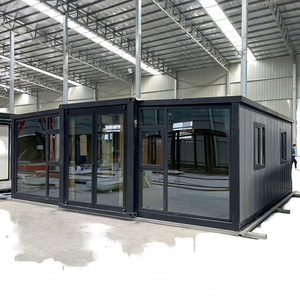
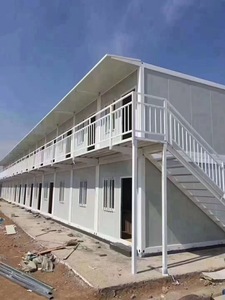
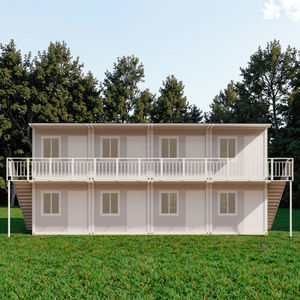
Large-scale infrastructure initiatives—such as the Siemensstadt Square development, TXL Urban Tech Republic redevelopment, and BER Airport logistics expansions—utilize multi-story stackable sanitary container complexes. These include high-capacity shower blocks, changing facilities, and chemical-resistant industrial WC units designed for rapid relocation.
Commercial Venues & Festival Grounds
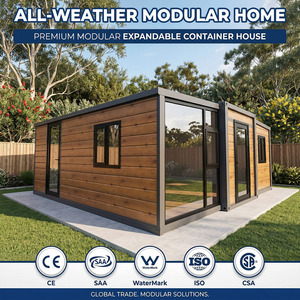
Pop-up venues, open-air culture spaces in Kreuzberg, and seasonal exhibition spaces near Messe Berlin demand aesthetically elevated modular restroom blocks. Custom exteriors feature timber-lath cladding or corten steel finish options, seamlessly blending into contemporary urban landscapes.
Berlin Market Trends: Decarbonization, Circular Construction & IoT
The Berlin modular construction market is experiencing a profound paradigm shift driven by statutory environmental commitments and digital transformation. Chinese manufacturers who maintain a leading market share in Germany actively integrate three core technological trends into their production lines:
1. Circular Economy & Cradle-to-Cradle (C2C) Design
Berlin's local government prioritizes recyclable construction methods under the Kreislaufwirtschaftsgesetz. Modern Chinese modular restrooms feature demountable bolt-connected steel frames and dry-assembled sandwich panels. At the end of a building's service lifecycle, over 95% of structural components can be fully disassembled, reused, or recycled, drastically lowering life-cycle embodied carbon.
2. IoT Smart Restroom Telemetry & Predictive Maintenance
To reduce municipal maintenance costs across Berlin's public restroom network, modular units come factory-fitted with smart LoRaWAN or GSM sensors. Facilities management teams monitor real-time metrics including water consumption, tank capacity, soap level alerts, foot traffic counts, and automated leak detection via cloud dashboards.
3. Water Conservation & Vacuum Technology
Addressing urban water management goals, advanced modular units incorporate low-flow micro-flush WCs (1.5 liters per flush) or micro-vacuum drainage systems. Greywater from washbasins is collected and filtered onsite for secondary flushing, achieving up to 60% total potable water savings compared to traditional gravity-fed systems.
Why Partnering with Top Chinese Modular Manufacturers Yields Superior Project Economics
Sourcing modular restroom buildings directly from leading Chinese OEM factories provides Berlin contractors, developers, and municipal suppliers with decisive strategic and financial advantages:
1. Fully Integrated In-House Manufacturing
From initial CAD/BIM architectural modeling to structural frame rolling, sanitary fixture assembly, and pre-shipment hydro-testing, complete production is executed under one roof under strict ISO 9001 and ISO 14001 quality systems.
2. Unmatched Cost Efficiency (40-50% Capital Savings)
Optimized raw material procurement, scaled industrial production, and automated manufacturing processes reduce unit capital expenditure significantly compared to local Western European onsite builds, without compromising material grade or DIN compliance.
3. Turnkey End-to-End Export Logistics
Top suppliers maintain specialized international logistics channels, coordinating sea freight shipping directly to major Northern European ports (Hamburg, Bremerhaven, or Stettin) combined with inland heavy-duty truck delivery directly to Berlin project sites with pre-arranged customs clearance documentation (EORI and CE declarations).
Berlin Procurement FAQ: Regulatory, Logistics & Technical Guidance
Navigating the import and installation of Chinese modular restroom buildings in Germany involves key statutory and operational considerations. Below are expert answers to frequently asked procurement questions:
All structural drawings, static calculations, and thermal energy certificates are prepared in accordance with European Eurocodes (EN 1993, EN 1991) and German DIN standards. Manufacturers provide comprehensive technical documentation packages (Typenprüfung / Werksbescheinigung) to facilitate rapid local building permit approvals (Baugenehmigung) through Berlin district authorities (Bauaufsichtsamt).
Depending on soil load-bearing capacity (Baugrund) in Berlin districts, units typically require a reinforced concrete strip foundation (Streifenfundament), point foundations (Punktfundamente), or a level reinforced slab. Factory engineers supply detailed foundation load plans (Gründungsplan) prior to shipment.
Restroom modules arrive fully pre-wired and pre-plumbed from the factory. Utility hookups feature standardized external connection points (DN 100/110 sewage outlets, 3/4" fresh water inlets, and CEE 32A electrical quick-connect plugs) allowing local German licensed trade professionals (Meisterbetriebe) to complete site connection within hours.
Units destined for Berlin include insulated sandwich panels (PIR/Mineral Wool), insulated subfloor layers, internal frost-protection heaters (Frostwächter), and thermostatic heat-tracing cables (Heizband) around exposed piping manifolds to guarantee operation at temperatures as low as -20°C.
Standard engineering and factory manufacturing require 20 to 30 days. Ocean freight transport from Chinese ports (Qingdao, Shanghai, or Ningbo) to Hamburg/Bremerhaven takes approximately 30 to 35 days, followed by 1 to 2 days for inland road transport to Berlin. Total project delivery is reliably achieved within 60 to 70 days.
Yes. Manufacturers offer custom secondary façade kits including vertical larch wood louvers, zinc cladding panels, high-pressure laminate (HPL) decor panels, or brick-slip veneers that comply with local municipal design guidelines (Gestaltungssatzung).
Request Your Custom Modular Restroom Quotation & Technical Package
Partner with China’s premier modular restroom manufacturer for your upcoming Berlin development, infrastructure project, or municipal tender. Receive free BIM/CAD drawings, static calculations, and competitive factory-direct pricing today.
Contact Us