Engineering-Grade Modular Building Solutions
Explore our ISO 9001/14001 certified, fire-rated prefabricated modular structures designed for rapid assembly across Bangkok, Chonburi, Rayong, and nationwide Thailand.
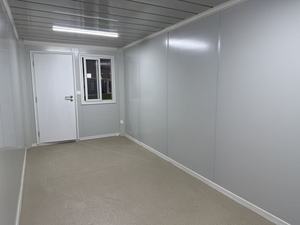
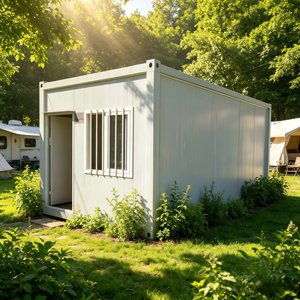
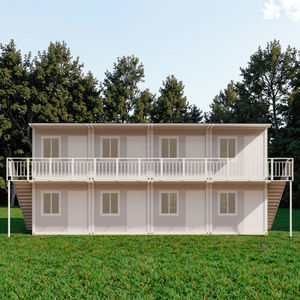
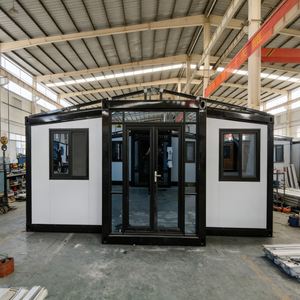
Technical Whitepaper: Structural Fire Protection & Thermal Decoupling in Tropical Prefabrication
As industrial expansion across Thailand's Eastern Economic Corridor (EEC)—encompassing Chonburi, Rayong, and Chachoengsao—accelerates, procurement executives and EPC general contractors face unprecedented demands for rapid infrastructure deployment without compromising high-risk fire safety or life-safety standards. Standard prefabricated buildings often rely on low-density EPS (Expanded Polystyrene) or subpar PU (Polyurethane) core panels, which present extreme fire vulnerabilities under high heat thermal runoff conditions.
Our engineering framework redefines industrial modular construction by standardizing on A1-grade non-combustible core materials combined with advanced structural steel framework designs. By integrating high-density Rockwool (mineral wool with melt temperatures exceeding 1,000°C) and fiber-cement MGO (Magnesium Oxide) structural decking, our modular units achieve certified 1-hour to 4-hour fire integrity (EI 60 to EI 240) under GB/T 9978, ASTM E119, and EN 13501-1 testing protocols.
Key Technical Insight: Fire prevention in modular architecture is not merely panel deep. True structural fire protection requires anti-thermal-bridge steel profiling, intumescent structural column coatings, and automatic fire-dampened HVAC duct penetrations that prevent toxic combustion gases from traversing module connections.
Material Science Breakdown: Core Thermal & Fire Performance
Thailand’s climate exhibits persistent ambient relative humidity (RH 70%-90%) and average temperatures of 32°C to 38°C. This combination leads to severe micro-climatic condensation within standard wall cavities, accelerating structural frame oxidation and destroying thermal performance. Our custom-manufactured sandwich panels utilize hydrophobic, binders-treated mineral fiber cores paired with continuous fluoropolymer (PVDF) coated galvanized steel skins (AZ150 g/m² zinc-aluminum alloy).
| Insulation Core Type | Density (kg/m³) | Thermal Conductivity (W/m·K) | Combustibility Class | Max Temp Resistance | Thai Climate Suitability |
|---|---|---|---|---|---|
| Structural Hydrophobic Rockwool | 120 - 160 kg/m³ | 0.036 - 0.038 | Class A1 (Non-Combustible) | 1,050°C | Optimal (Fire & Thermal Protection) |
| PIR (Polyisocyanurate) High-Index | 40 - 45 kg/m³ | 0.022 - 0.024 | B-s1, d0 (Fire Retardant) | 350°C | Moderate (Requires Fire Walls) |
| Standard EPS (Polystyrene) | 15 - 20 kg/m³ | 0.041 | Class F (Combustible) | 80°C | Unsuitable for Industrial EPC |
Structural Physics: Wind Load and Seismic Resistance for Southeast Asia
Thailand’s coastal regions and northern provinces demand high resistance against localized tropical depressions, monsoonal wind shear, and minor seismic reverberations. Our cold-formed Light Gauge Steel (LGS) and heavy primary steel frame (Q355B structural grade) modules are calculated under ASCE 7-16 and Thai DPT (Department of Public Works and Town & Country Planning) criteria. Frames are pre-engineered to withstand lateral wind pressures up to 1.5 kN/m² (equivalent to Typhoon Category 3-4 forces or wind velocities up to 210 km/h) without plastic deformation of module joints.
Localized Application Scenarios Across Thailand
Tailored engineering configurations optimized for specific geographic, regulatory, and industrial landscapes within the Kingdom of Thailand.
EEC Zone Industrial Site Compounds
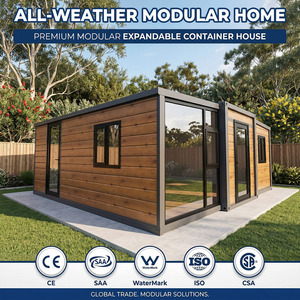
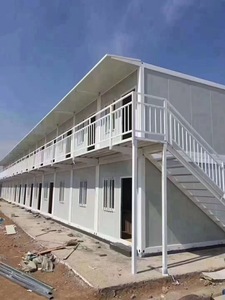
High-density site offices, multi-story workforce accommodation camps, and control rooms deployed rapidly within Rayong and Map Ta Phut petrochemical complexes requiring strict ATEX and fire-isolation distances.
Island & Coastal Eco-Resort Villas
Rapidly assembled luxury modular suites for Southern Thailand (Phuket, Koh Samui, Krabi). C4-grade anti-corrosion treatments prevent salt-mist oxidation while maintaining zero-land-disturbance eco-compliance.
ISO Medical Cleanrooms & Field Labs
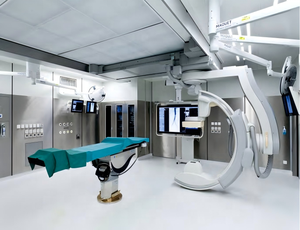
Negative-pressure isolation container units and bio-containment stations for public health institutions in Bangkok Metro and border provinces, pre-fitted with HEPA filtration and non-porous antimicrobial surfaces.
Thailand Prefabrication Trends & Market Dynamics (2025–2030)
The construction landscape in Thailand is undergoing a structural transition driven by acute skilled labor shortages, rising on-site construction costs in urban centers like Greater Bangkok, and stringent national sustainability directives under the BCG (Bio-Circular-Green) Economy Model. Major EPC firms and project developers are shifting from traditional wet construction (cast-in-place concrete) to fully modular off-site manufacturing (OSM).
1. ESG & Carbon Neutrality Procurement Standards
Multinational corporations setting up manufacturing plants in Thai industrial estates (such as WHA and Amata City) now mandate environmental product declarations (EPDs) for construction materials. Prefabricated modular steel buildings reduce site material waste by over 85% and lower embodied carbon through recycled steel usage (Q235B/Q355B steel is over 95% recyclable at end-of-life).
2. Adaptation to Extreme Monsoonal & Urban Flood Risks
Flash flooding during monsoon seasons poses severe threats to ground-level infrastructure across the Chao Phraya River Basin. Modern modular architecture incorporates elevated steel pier foundation systems and sealed sub-floor chassis design. Inter-module structural seals utilize dual-stage EPDM gaskets combined with structural silicone to ensure complete flood water ingress resistance up to 1.2 meters of standing water.
3. Integration of Smart MEP and Solar PV Roof Assemblies
With high solar irradiance levels across Central and Northeastern Thailand (Isan), modular designs are increasingly integrated with lightweight monocrystalline solar panels. Roof structures are pre-engineered with dedicated load-bearing capacity (an additional 0.35 kN/m² dead load) to accommodate PV rack mounting without compromising structural roof integrity or fire barrier integrity.
Why Global Engineering Teams Choose Our Modular Systems
Direct-from-factory manufacturing precision engineered to international building codes, combining Chinese production efficiency with rigorous global QA/QC standards.
Direct Port Logistics to Laem Chabang & Bangkok
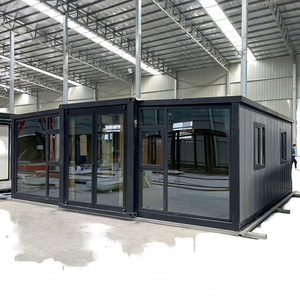
Seamless ocean freight routes from coastal Chinese ports directly to Laem Chabang (THLCH) and Bangkok (THBKK). Flat-pack container bundles are dimensioned for standard 40ft HQ shipping containers, minimizing freight tariffs.
Full In-House MEP & Structural Engineering
Our engineering team provides comprehensive BIM/Revit models, structural calculation books, electrical schematics (compliant with Thai PEA/MEA standards), and plumbing layouts prior to factory fabrication.
Zero Tariff ACFTA Form E Advantage
Under the China-ASEAN Free Trade Agreement (ACFTA), we issue certified Form E certificates of origin, allowing Thai importers to enjoy 0% preferential import customs duties on qualifying steel structures.
Procurement & Engineering FAQ for Thai B2B Importers
Request Complete Fireproof Technical Specifications & Factory Direct Pricing
Partner with China’s leading certified modular manufacturer. Access localized project references, BIM libraries, structural calculation books, and exclusive ACFTA tariff guidance.
Get Catalog