Executive Industry Report: The Evolution of Offsite Modular Retail Architecture
As international retail networks, airport concessionaires, municipal operators, and quick-service restaurant (QSR) chains accelerate physical footprint expansion, traditional brick-and-mortar construction poses severe operational bottlenecks—including high site disruption, unpredictable labor costs, and extended time-to-market. Industrial offsite modular manufacturing has transitioned from a temporary spatial fix to a permanent structural asset strategy. This technical white paper examines engineering benchmarks, structural steel standards, thermal optimization, and supply-chain logistics for global B2B procurement.
1. Speed to Revenue & Offsite Construction Efficiency
Modern modular retail kiosks manufactured in ISO 9001-certified factory environments cut site deployment timelines by up to 75% compared to traditional on-site construction. By executing civil foundation preparation concurrently with offsite factory fabrication, enterprise operators compress store launch schedules from 6 months down to 3 weeks. Precision cold-formed steel (CFS) framing, pre-integrated Mechanical, Electrical, and Plumbing (MEP) infrastructure, and standardized architectural joinery ensure compliance with international building codes (IBC) before shipping.
2. Structural Integrity, Materiality & Environmental Resistance
Export-grade modular kiosks require robust structural engineering to withstand ocean freight stress, extreme thermal fluctuations, high wind loads (up to 150 km/h), and seismic acceleration. High-grade hot-dip galvanized structural frames paired with non-combustible Rockwool or PIR (Polyisocyanurate) insulated sandwich panels guarantee structural longevity exceeding 25 years. Surface treatments utilize fluorocarbon (PVDF) anti-corrosion coatings, ensuring UV resistance and salt-spray durability in harsh coastal environments.
Featured Modular Commercial & Retail Kiosk Solutions
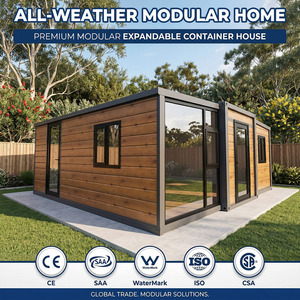
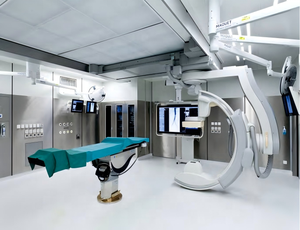
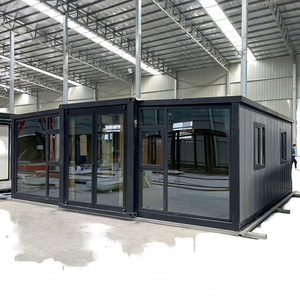
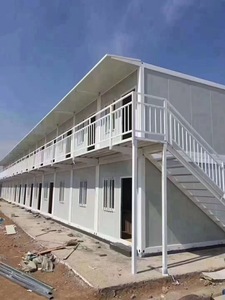
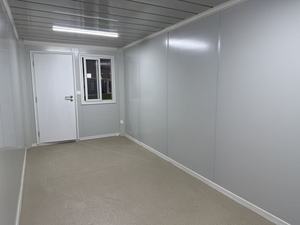
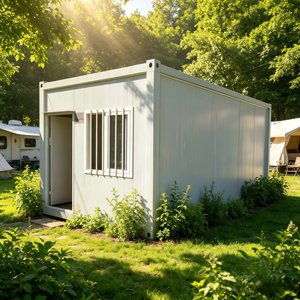
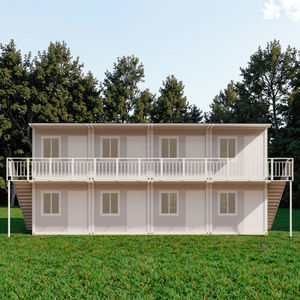
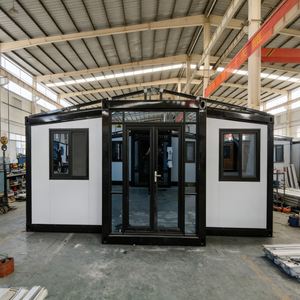
Explore our top-engineered modular container units, expandable kiosks, cleanrooms, and mobile retail platforms manufactured for global distribution.
Top 10 Benchmark Evaluation Criteria for Selecting a Modular Manufacturer
When procuring modular retail kiosks and prefabricated commercial structures for export, global procurement directors must audit suppliers against these ten core engineering and operational metrics.
1. ISO Certification & Quality Management
Ensure the manufacturer maintains certified ISO 9001 (Quality Management) and ISO 14001 (Environmental) systems. Production lines must feature standardized quality control checklists across structural welding, panel sealing, and MEP pressure testing.
2. BIM / CAD Customization Engineering
Leading exporters provide complete Building Information Modeling (BIM LOD 400) and 3D CAD visualization before manufacturing. This guarantees seamless integration of custom brand signage, digital screens, and POS hardware.
3. Structural Steel Engineering
Verify cold-formed galvalume steel framing thickness (minimum 2.5mm–3.0mm structural chassis). Galvanization density (Z275 / AZ150 minimum) prevents structural oxidation in high-humidity or tropical ocean shipping environments.
4. Total Cost of Ownership (TCO)
Evaluate overall procurement pricing against shipping optimization (CKD/SKD flat-packing), on-site crane requirements, energy efficiency ratings, and structural lifespan to minimize operational expenditures (OPEX).
5. Thermal & Acoustic Performance
Thermal envelope specs (U-values below 0.22 W/m²K) using high-density polyurethane (PU) or rockwool insulation significantly lower indoor HVAC electrical draw in arid Middle Eastern or extreme northern climates.
6. Fire Safety & Code Compliance
Insulation materials must achieve EN 13501-1 Class A1 / A2 non-combustibility ratings or ASTM E84 flame-spread compliance, crucial for installation inside high-security airports, train stations, and enclosed shopping malls.
7. Plug-and-Play Factory MEP Integration
All electrical distribution boards (DB), concealed conduit wiring (CE/UL marked), LED recessed lighting, plumbing stacks, and internet RJ45 nodes should be 100% pre-wired and factory-tested prior to export packaging.
8. Global Logistics & Export Packaging
Modular units designed specifically for standard ISO shipping dimensioning (20ft / 40ft HQ or flat-pack bundles) dramatically lower sea-freight tariffs and protect finished surfaces during intermodal freight transfer.
9. Rapid Field Assembly & Modular Mobility
Select manufacturers offering bolt-together demountable systems that require no heavy field welding. Units can be disassembled, relocated, and re-erected as retail leases shift between commercial sites.
10. After-Sales Warranty & Engineering Support
Comprehensive manufacturer warranties (minimum 10-year structural frame guarantee) paired with dedicated global engineering technical teams ensure prompt replacement parts, site manuals, and installation supervision support worldwide.
Future Procurement & Design Trends (2025–2030)
Strategic foresight into smart kiosk technologies, off-grid energy systems, and circular modular retail design.
Smart Solar-PV & Off-Grid Energy Autonomy
Next-generation commercial retail kiosks increasingly integrate micro-inverter rooftop solar PV arrays coupled with lithium iron phosphate (LiFePO4) energy storage systems. This enables complete off-grid operation for beach resorts, remote festival venues, and outdoor civic plazas, eliminating expensive trenching and electrical grid connection fees.
IoT-Connected Smart Facilities & Unmanned Retail
Modular kiosks are transforming into smart retail micro-hubs featuring automated climate adjustments, occupancy monitoring sensors, remote LED lighting management, and RFID frictionless checkout systems. Factory-embedded smart telemetry allows enterprise chain managers to monitor unit health across hundreds of international locations in real-time.
Why Partner With Us: Global Enterprise Advantage
A comparative evaluation of enterprise offsite modular manufacturing versus conventional local contracting methods.
| Key Metric / Spec | Enterprise Offsite Manufacturing | Conventional On-Site Building |
|---|---|---|
| Production Cycle | 2 to 4 Weeks (Factory Standardized) | 16 to 24 Weeks (Weather Dependent) |
| Quality Control | ISO 9001 Factory Testing & Tolerances | Variable On-Site Craftsman Quality |
| Mobility & Relocation | 100% Relocatable (Demountable Steel Frame) | Permanent / Demolition Required |
| Material Waste Rate | < 2% Waste (Precision CNC Cutting) | 15% to 25% On-Site Material Scrap |
| Global Export Capability | Flat-Pack Container Loading (45+ Countries) | Local Supply Chain Constrained |
Frequently Asked Questions (Technical & Procurement)
Direct expert answers to critical questions raised by commercial buyers, site engineers, and procurement directors.
What structural standards do your modular retail kiosks comply with?
Our prefabricated modular kiosks are engineered in strict accordance with the International Building Code (IBC), Eurocode structural steel design standards (EN 1993), and wind/seismic resistance criteria. Frames utilize cold-formed galvanized steel profiles designed to withstand wind velocity up to 150 km/h and Zone 4 seismic activity.
How are the modular retail kiosks packaged and shipped internationally?
Depending on the product model, units are supplied either as fully assembled units (for immediate drop-in installation) or as demountable Flat-Pack (CKD) bundles. Up to six 20ft flat-pack modular kiosk cabins can be consolidated into a single standard 40ft HQ ocean container, drastically reducing ocean freight costs.
Can electrical and plumbing systems be tailored to regional voltage standards?
Yes. All MEP systems are fully customized during factory production. We engineer electrical wiring, breaker panels, sockets, and interior LED lighting to comply specifically with US/Canada standards (110V/60Hz, UL listed), UK/EU standards (230V/50Hz, CE marked), or Gulf GCC standards (SASO certified).
What is the typical lifespan and warranty period of an export modular kiosk?
Our commercial modular kiosks feature an engineered design lifespan of over 25 years under standard maintenance. We provide a 10-year structural frame warranty along with a 2-year warranty on factory-installed finishing panels, windows, doors, and electrical components.
What site foundation preparation is required prior to kiosk delivery?
Modular kiosks require minimal civil work. They can be installed directly on flat concrete pads, reinforced concrete strip footings, or steel screw piles. This eliminates complex excavation and allows for rapid installation and immediate commissioning upon arrival on site.
Do you provide custom OEM/ODM architectural branding and interior fit-outs?
Absolutely. We operate a complete turnkey OEM/ODM service. From corporate logo laser-cutting, custom exterior powder coating, and specialized glazing to commercial counter layouts, integrated refrigeration, and digital menu display installations, our in-house engineering team handles everything.
Ready to Scale Your Commercial Retail Footprint Globally?
Consult with our senior modular structural engineers today. Receive comprehensive technical drawings, BIM files, product catalogs, and detailed factory-direct pricing within 24 hours.
Get a Quote