Industrial Grade Modular & Heavy Steel Systems
High-strength structural steel frameworks, ISO-compliant modular containers, and rapid-deployment prefabricated infrastructure directly from China's leading OEM/ODM manufacturing hubs.
Engineering Whitepaper: Structural Steel Sourcing & Offsite Fabrication Standards
As modern construction paradigms pivot toward rapid execution, zero-waste offsite fabrication, and structural longevity, China wholesale heavy steel frame buildings manufacturers and factories have emerged as pivotal partners for global EPC (Engineering, Procurement, and Construction) contractors, project developers, and government agencies. Modern heavy structural steel building manufacturing involves complex structural mechanics, advanced metallurgical metallurgy, automated CAD/CAM fabrication, and strict international building code compliance.
1. Metallurgy, Steel Quality & Section Geometry
The primary backbone of industrial-grade heavy steel framed structures rests on high-tensile structural steel profiles. Leading Chinese manufacturers utilize premium grade Q355B, Q355D, and ultra-high-strength Q460E steel, which map directly to international equivalents such as ASTM A572 Grade 50 and European EN 10025 S355JR/S355J2.
Unlike light-gauge cold-formed steel (LGFS), heavy steel framing utilizes hot-rolled H-sections, built-up welded plate girders, box columns, and lattice trusses. These heavy structural members provide extraordinary load-bearing capacity, allowing for massive clear spans exceeding 60 meters without internal support columns—essential for modern logistics centers, aircraft hangars, chemical process plants, and multi-story commercial complexes.
2. Technical Specification & International Standards Matrix
| Structural Parameter | Heavy Steel Framing (H-Beam / Box Beam) | Modular Container Frame Systems | International Standard Compliance |
|---|---|---|---|
| Primary Steel Grade | Q355B / Q355D / Q460D (Hot-Rolled / SAW Welded) | Q235B / Cold-Formed Galvanized Profiles | GB/T 1591, ASTM A572, EN 10025 |
| Structural Design Code | AISC 360-16 / Eurocode 3 (EN 1993) / GB 50017 | ISO 1496-1 / IBC Section 3111 | AISC 360, EN 1090-2 (EXC2/EXC3) |
| Wind Resistance | Up to 280 km/h (Category 5 Hurricane Class) | Up to 180 km/h (Custom Braced) | ASCE 7-16, EN 1991-1-4 |
| Seismic Performance | Seismic Zone 4 / Fortification Intensity 9 | Zone 3 / Standard Modular Isolation | GB 50011-2010, Eurocode 8 |
| Corrosion Protection | Hot-Dip Galvanizing (85µm-120µm) / Fluorocarbon Paint | Electro-Galvanized + Zinc-Rich Epoxy Coating | ISO 12944 (C3-C5 Marine Environments), ISO 1461 |
| Fire Resistance Rating | 1 to 4 Hours (Intumescent Paint / Board Enclosure) | 1 to 2 Hours (Rockwool Sandwich Wall Systems) | ASTM E119, BS 476, EN 13501-1 Class A1 |
3. Welding Automation, NDT Inspection & QA/QC Infrastructure
Structural integrity depends heavily on joint connections and weld quality. Tier-1 Chinese heavy steel factories deploy automated Submerged Arc Welding (SAW), robotic CO2 gas-shielded arc welding, and CNC 3D plasma profile cutting. Welding procedures are audited under AWS D1.1 (American Welding Society) and EN ISO 15614 standards.
Crucially, 100% of critical load-bearing butt welds undergo Non-Destructive Testing (NDT), including Ultrasonic Testing (UT), Magnetic Particle Testing (MT), and Radiographic Testing (RT) to ensure zero internal voids, slag inclusions, or micro-cracks before factory dispatch.
Factory Strengths & Vertical Integration
Combining end-to-end architectural engineering, in-house steel roll-forming, automated welding, and global logistic networks to optimize total cost of ownership (TCO).
Global Sourcing & Industry Development Trends (2025–2030)
The global heavy steel manufacturing market is experiencing a profound paradigm shift driven by digital integration, sustainability mandates, and emergency response preparedness. Key trends transforming the procurement landscape include:
Trend 1: BIM-to-CAM Direct Digital Manufacturing
Leading Chinese heavy steel framing manufacturers have integrated Level 3 Building Information Modeling (BIM) directly with automated Computer-Aided Manufacturing (CAM) CNC cutting and drilling lines. Structural designs generated in Tekla or Revit auto-generate DSTV files that feed steel fabrication machinery, eliminating manual drafting errors and achieving sub-millimeter tolerances on bolt-hole locations.
Trend 2: Hybrid Structural Systems (Heavy Steel Girders + Modular Pods)
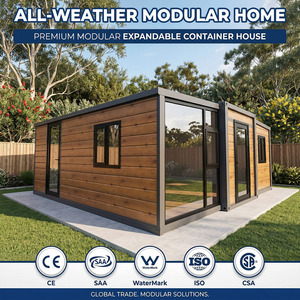
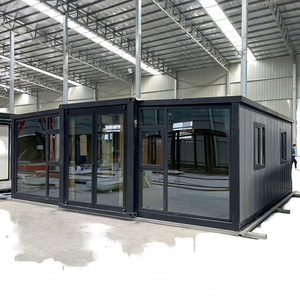
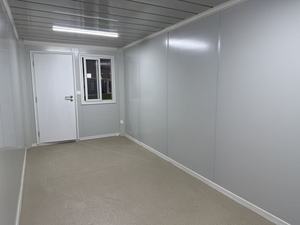
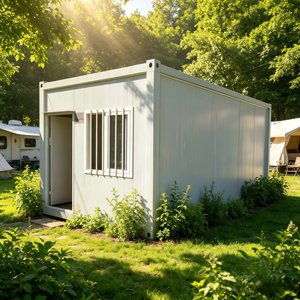
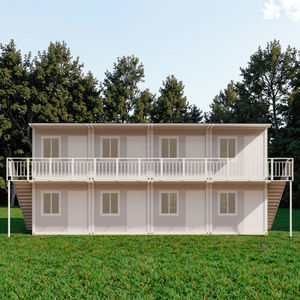
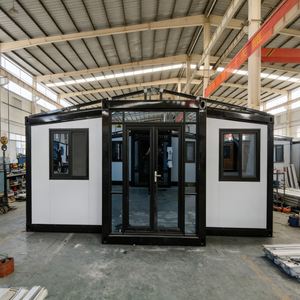
Future high-rise and large-scale commercial developments increasingly combine heavy structural steel core frames with pre-finished volumetric modular container pods. The heavy steel backbone provides the necessary lateral stiffness and wide-span column spacing, while modular interior units (clinics, hotel suites, site offices) are slotted into the framework, accelerating commissioning dates by months.
Trend 3: Environmental Product Declarations (EPD) & Green Steel
International sustainability metrics (such as LEED v4 and BREEAM) now require verified Environmental Product Declarations (EPD) covering Scope 1, 2, and 3 carbon emissions. Top-tier factories in China are transitioning toward Electric Arc Furnace (EAF) steel production utilizing recycled scrap steel, coupled with low-VOC waterborne anticorrosive coatings, reducing embodied carbon by up to 35% compared to traditional blast furnace routes.
Trend 4: Rapid-Deployment Medical & Cleanroom Infrastructure
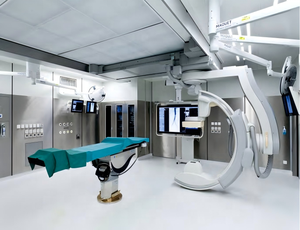
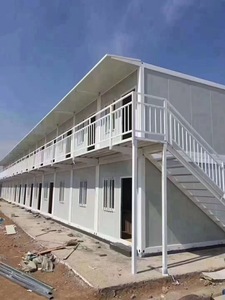
As global health security and biopharma manufacturing demand rapid scalability, containerized cleanrooms (ISO Class 100 to Class 10,000) and multi-story modular hospital centers represent the fastest-growing OEM segment. These specialized units feature integrated positive/negative pressure HVAC filtration, anti-bacterial stainless steel paneling, and emergency power drop-ins pre-wired at the factory level.
Frequently Asked Questions (Procurement & Technical FAQ)
Request a Turnkey Engineering & Factory Price Proposal
Connect directly with our senior structural engineering team to review your project blueprints, calculate structural steel quantities, and receive an itemized factory wholesale quote within 24 hours.
Send an Inquiry