Executive Summary: The Evolution of Portable Utility Shed Sourcing
In the modern international construction, mining, agricultural, and commercial sectors, the demand for high-durability, rapid-deployment, and thermally efficient portable utility sheds and modular container buildings has reached an unprecedented peak. China has solidified its status as the global epicenter for off-site steel structure manufacturing and modular housing innovation. Through advanced Cold-Formed Steel (CFS) technology, Automated Sandwich Panel Production Lines, and ISO-compliant engineering standards, Chinese factories deliver industrial-grade portable utility units that surpass conventional site-built alternatives in speed, structural integrity, and total lifecycle costs.
This technical whitepaper, curated by leading modular construction engineers and global B2B procurement specialists, serves as an authoritative guide for commercial buyers, EPC contractors, and international importers. It analyzes core technical specifications, structural material science, cross-border supply chain strategies, and critical procurement criteria required when partner-sourcing from top OEM/ODM Chinese exporters.
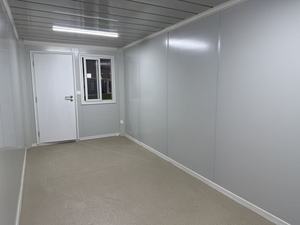
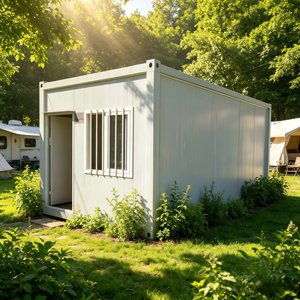
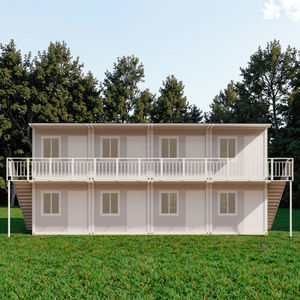
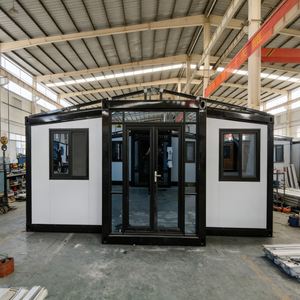
Featured Modular Sheds & Container Systems
Engineered for Rapid Assembly, Severe Climate Endurance, and Multipurpose Industrial Deployment
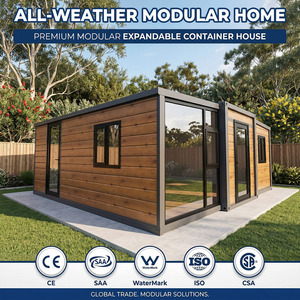
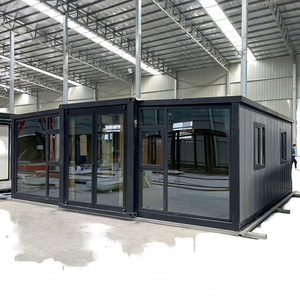
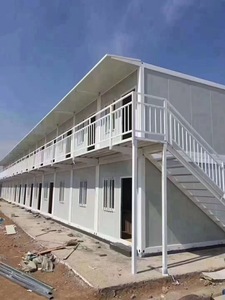
Global Sourcing Trends & Future Outlook (2025–2030)
The global portable utility shed market is transitioning from basic temporary storage boxes to high-performance, intelligent, and sustainable modular assets. B2B buyers must align their procurement strategies with four key industry shifts:
1. Advanced Flat-Pack & Z-Fold Modularity
To offset rising international ocean freight costs, Chinese factories are leading the development of ultra-compact flat-pack and Z-foldable modular designs. Up to 14 flat-pack container sheds can now fit into a single 40ft HQ shipping container, reducing per-unit freight costs by up to 70% compared to fully assembled cabins.
2. Zero-Carbon & BIPV Energy Integration
Future-proof portable utility sheds are adopting Building-Integrated Photovoltaics (BIPV) and rooftop solar kits with battery storage. Remote mining sheds, field clinics, and telecommunication shelters supplied by premier Chinese exporters are now capable of continuous 100% off-grid operation.
3. Severe Weather & C4/C5 Anti-Corrosion
Coastal, desert, and polar deployments require specialized metallurgical coatings. Leading Chinese suppliers are standardizing hot-dip galvanizing (≥275g/m²) combined with fluorocarbon (PVDF) spray painting to guarantee anti-corrosion performance under C4/C5 marine environments for over 20 years.
Engineering Whitepaper: Technical Specifications & Material Analysis
Evaluating China-based utility shed manufacturers requires a deep structural understanding of raw material grades, structural engineering load calculations, and thermal insulation metrics. Below is a detailed engineering matrix detailing standardized factory production parameters for export-grade portable sheds.
| Structural Component | Standard Commercial Grade | Industrial Heavy-Duty Grade | Engineering Testing Standard |
|---|---|---|---|
| Steel Framework | Q235B Cold-Formed Steel (2.0mm - 2.5mm) | Q355B Hot-Rolled Profile Steel (3.0mm - 4.5mm) | GB/T 700-2006 / EN 10025-2 |
| Surface Treatment | Electro-galvanized + Epoxy Primer (60μm) | Hot-Dip Galvanized (≥275g/m²) + PVDF Finish (120μm) | ISO 12944 C4/C5 Corrosion Test |
| Wall Core Insulation | 50mm EPS / Glasswool Panel (14kg/m³) | 75mm - 100mm High-Density Rockwool / PIR (120kg/m³) | ASTM C518 / EN 13501-1 Class A1 |
| Thermal Conductivity (U-Value) | 0.45 W/m²K | ≤ 0.22 W/m²K (Cold Climate Optimized) | ISO 10211 Thermal Performance |
| Floor Load Capacity | 2.0 kN/m² (Live Load) | ≥ 3.5 kN/m² (Heavy Machinery / Storage) | AS/NZS 1170 Structural Design |
| Seismic & Wind Rating | Magnitude 7 Seismic / 110 km/h Wind | Magnitude 8.5 Seismic / 140 km/h Typhoon Resistant | GB 50009-2012 Load Code |
Thermal Core Science: Rockwool vs. PIR vs. EPS
Selecting the correct core material for wall and roof sandwich panels is critical to operational safety and energy consumption. While EPS (Expanded Polystyrene) offers a budget-friendly solution for mild climates, industrial procurement teams operating in extreme regions prioritize Rockwool (Mineral Wool) for its non-combustible A1 fire rating, or PIR (Polyisocyanurate) for supreme thermal insulation density ($U$-value as low as $0.018\,W/m\cdot K$).
Enterprise Capabilities & OEM Sourcing Advantages
Partnering with an established Chinese modular building exporter provides key strategic capabilities that streamline international site development and lower procurement risks:
ISO & CE Certified Production
Manufacturing processes are strictly audited under ISO 9001 (Quality Management), ISO 14001 (Environmental), and ISO 45001 (Occupational Health). Structural steel welds and frames comply with European CE (EN 1090-1) and American IBC standards.
In-House Structural & MEP Engineering
Dedicated architectural engineering teams utilize BIM and PKPM structural software to generate 3D layouts, structural calculation reports, and pre-integrated Mechanical, Electrical, and Plumbing (MEP) schematics tailored to localized building codes.
Global Turnkey Logistics & Site Support
From factory loading, export customs clearing, and ocean shipping to site assembly guidance and engineer dispatch, complete end-to-end supply chain execution is guaranteed across 45+ countries worldwide.
Frequently Asked Questions (FAQ) for B2B Buyers
Essential Technical & Commercial Clarifications for Direct Factory Procurement
• Flat-Pack Containers: Roof and floor frames are pre-assembled in factory; wall panels and accessories are packed inside. 4 units pack into a SOC 20ft frame, or 8-10 units load into a 40ft HQ container.
• Z-Foldable Units: Fully integrated units that collapse down to a 300mm height profile. Up to 12 units fit in a single 40ft HQ container, allowing rapid 15-minute setup per shed.
• Knock-Down (CKD) Kits: Unassembled steel profiles and loose panels, maximizing volume efficiency for mega-projects.
Ready to Source High-Quality Portable Utility Sheds Direct from Top Exporters?
Connect with our structural engineering team today to request custom CAD drawings, factory price catalogs, structural load test reports, and FOB/CIF freight quotes for your upcoming project.