Featured Telecom Shelters & Modular Enclosures
Explore our CE-certified, factory-preintegrated prefabricated equipment shelters designed for rapid site deployment, high thermal efficiency, and maximum physical security across telecom infrastructure projects worldwide.
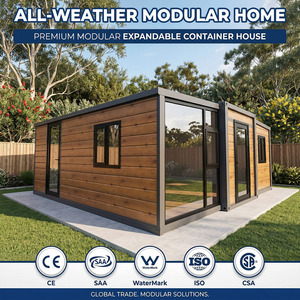
Modular Telecom Equipment Shelter Container
Heavy-duty insulated modular housing for mobile base stations, fiber optical terminals, and central switching nodes with integrated HVAC free-cooling.
Contact Us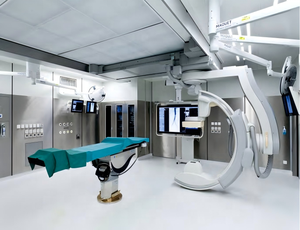
Controlled Environment Server & Lab Equipment Shelter
Dust-free, climate-controlled modular stainless steel shelter ideal for high-precision electronic equipment, optical testing labs, and sensitive network core units.
Contact Us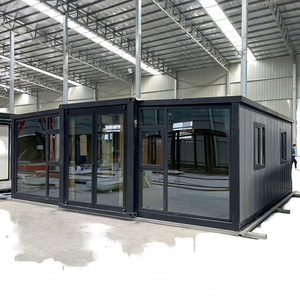
Compact Portable Micro Telecom Repeater Cabin
Cost-effective, highly portable prefabricated micro shelter optimized for remote mountain repeaters, highway coverage nodes, and rural broadband access.
Contact Us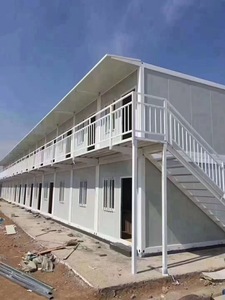
Two-Story Modular Telecom Operations & Monitoring Center
Multi-level modular facility hosting ground-floor equipment racks, uninterruptible power supply (UPS) batteries, and upper-floor technician control rooms.
Contact Us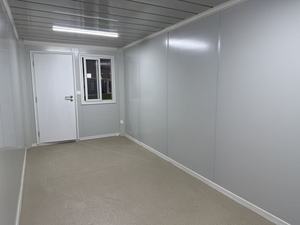
Z-Foldable Rapid-Deployment Mobile Power & Storage Cabin
Foldable steel container shelter for emergency network restoration, site power generators, and temporary event telecommunications support.
Contact Us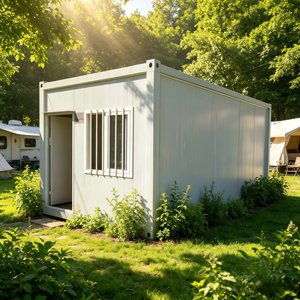
Customizable Extreme-Environment Telecom Base Station
Engineered with specialized sandwich insulation panels and corrosion-resistant outer cladding for high-humidity coastal and desert heat installations.
Contact Us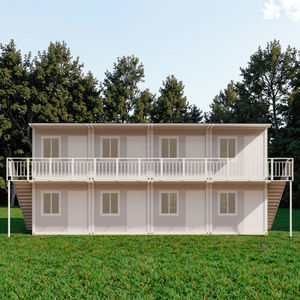
Prefabricated Modular Fiber Distribution & Data Node Shelter
Expandable modular infrastructure supporting high-density optical distribution frames, carrier-grade network switches, and localized edge servers.
Contact Us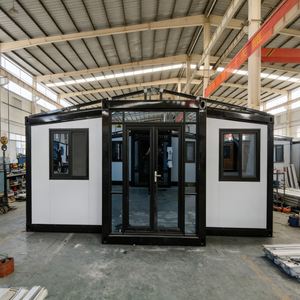
Steel-Framed Heavy Payload Expandable Equipment Enclosure
Reinforced steel structural frame designed to support heavy lithium-ion battery banks, hybrid solar inverters, and high-frequency microwave receivers.
Contact UsIndustry Whitepaper: Next-Generation Telecom Shelter Engineering & Global Sourcing Guidelines
An Executive Analysis of CE-Compliant Modular Enclosures, Thermal Management Optimization, and Edge Infrastructure Deployment Trends.
In an era defined by rapid 5G rollout, optical fiber network expansion, and decentralized Edge Computing Architecture, telecommunications operators, tower companies (TowerCos), and EPC contractors demand modular physical infrastructure that combines uncompromising physical security, severe climate resilience, and strict regulatory compliance. As a premier CE certified prefabricated telecom shelter manufacturer based in Istanbul, Turkey, Prefabex engineers precision-manufactured equipment shelters that serve as the backbone for mission-critical signal processing and power management across four continents.
1. Regulatory Compliance & Engineering Rigor: The Imperative of CE Certification
Procuring equipment shelters for international telecommunication compounds requires compliance with rigorous structural, environmental, and safety frameworks. The European CE Marking is not merely a trading permit—it is a comprehensive verification of structural safety under EN 1090-1 and EN 1090-2 (Execution of Steel Structures) and fire safety performance under EN 13501-1.
Our prefabricated telecom shelters undergo extensive structural load testing to withstand extreme environmental forces:
- Wind Load Endurance: Engineered to withstand hurricane-force winds up to 250 km/h (155 mph) in coastal and mountain ridge deployments.
- Seismic Resilience: Certified structural framing compliant with Seismic Zone 4 safety factors, protecting sensitive optical routing and rack-mounted servers from ground tremors.
- Thermal Integrity & U-Value Control: High-density Polyisocyanurate (PIR) and Rockwool core sandwich panels achieve thermal transmittance values down to 0.18 W/m²K, significantly reducing HVAC power consumption.
- Ingress Protection (IP Rating): Seamless structural sealing guaranteeing IP65 to IP66 ratings against fine sandstorms, torrential rains, and corrosive coastal saline atmospheres.
- Fire Resistance: EI60 to EI120 structural fire resistance ratings, preventing external thermal damage and containing internal battery fire hazards.
Technical Specification & Structural Matrix Comparison
| Shelter Architecture Type | Core Insulation | Thermal U-Value | Ingress Protection | Target Deployment Application |
|---|---|---|---|---|
| Monolithic Skid-Mounted Shelter | 100mm PIR Sandwich Panel | 0.20 W/m²K | IP66 Waterproof & Dustproof | 5G Macro Base Stations & Desert Tower Sites |
| Stainless Steel Clean-Room Enclosure | Continuous Polyurethane Core | 0.18 W/m²K | ISO Class 100 / IP66 | Optical Core Nodes & Medical Telecom Labs |
| Demountable Flat-Pack Shelter | 75mm High-Density Rockwool | 0.24 W/m²K | IP65 Severe Weather Sealed | Remote Rural Fiber Nodes & Mountain Repeaters |
| Z-Foldable Emergency Power Unit | Fire-Retardant EPS / PIR | 0.28 W/m²K | IP65 Rapid Deployable | Disaster Recovery & Temporary Network Support |
2. Strategic Enterprise Advantages: The Prefabex Manufacturing Model
Located at the intersection of Europe and Asia in Istanbul, Turkey, Prefabex leverages an integrated manufacturing ecosystem that drastically reduces lead times and logistics costs while maintaining European engineering precision. With over 20 years of expertise and a delivery track record spanning 45+ countries, our turnkey operational framework offers critical advantages to telecom procurement executives:
- In-House Multidisciplinary Engineering: Our specialized engineering division integrates architectural, structural steel, mechanical (HVAC), and electrical (MEP) design under one roof, providing full CAD/BIM technical documentation and structural calculations prior to production.
- Factory Integration & Plug-and-Play Testing: Shelters are fully assembled and pre-fitted with cable entry transit frames (Roxtec), DC rectifiers, battery racks, internal busbars, auto-transfer switches (ATS), and fire suppression systems before leaving the factory floor, minimizing site setup times by up to 80%.
- Corrosion Resistance for Harsh Climates: Frame elements feature hot-dip galvanized structural profiles finished with polyurethane C5-M marine-grade powder coatings, guaranteeing a design lifecycle exceeding 25 years in hostile environments.
CE & ISO Quality System
Fully compliant with European Construction Products Regulations (CPR), ISO 9001 quality management, and ISO 14001 environmental standards.
Turnkey MEP Pre-Integration
Equipped with smart DC precision air conditioners, automatic fire extinguishing (FM-200/Novec 1230), and remote telemetry management units.
Global Export Logistics Hub
Optimized flat-pack and skid containers designed for standard 40ft High Cube sea freight, truck, or helicopter transport to remote off-grid sites.
3. Future Procurement Trends in Global Telecom & Edge Infrastructure
The global telecommunication landscape is undergoing a structural transition driven by technological disruption, decarbonization targets, and operational efficiency mandates. Procurement directors must anticipate several macro trends over the coming decade:
A. Proliferation of 5G Dense Edge Nodes & Micro-Shelters
Unlike 4G macro towers covering large radii, high-frequency 5G NR deployment requires dense network topology. This shift demands smaller, highly distributed Edge Data Center Shelters and Micro Telecom Cabins deployed directly in urban centers and industrial IoT parks. Future-proof shelters must accommodate dense server configurations with thermal loads exceeding 10 kW per rack.
B. Off-Grid Hybrid Solar & BESS Storage Integration
With rising grid energy costs and aggressive corporate net-zero targets, telecommunication operators are decoupling remote towers from diesel generators. Modern telecom shelters are evolving into integrated energy management hubs housing high-capacity Lithium Iron Phosphate (LiFePO4) Battery Energy Storage Systems (BESS) combined with MPPT solar charge controllers, requiring localized thermal zoning to preserve battery health.
C. Autonomous Remote Monitoring Systems (RMS) & Predictive Maintenance
Unmanned site management is becoming standard practice. Prefabex telecom shelters are pre-wired with IoT sensors measuring internal temperature gradient, humidity, door intrusion, hydrogen gas accumulation from standby batteries, smoke detection, and water ingress—transmitting real-time telemetry via SNMP/Modbus to central Network Operations Centers (NOC).
4. Technological Evolution Roadmap: Material Science & Thermal Dynamics
The design of equipment shelters has evolved from basic metal sheds into highly technical, climate-engineered modular capsules. The key technological milestones shaping modern shelter manufacturing include:
- Direct Free-Cooling & Dual-DC Inverter Air Conditioning: Utilizing ambient external air when temperatures permit reduces active compressor running time by up to 65%. Redundant dual-DC air conditioners powered directly by the site’s 48V DC bus ensure continuous operation during grid power blackouts.
- Electromagnetic Interference (EMI) & RFI Shielding: Specialized continuous metal cladding and conductive gaskets prevent external electromagnetic interference from impairing high-frequency microwave transmission and sensitive optical routing switches.
- Phase Change Material (PCM) Thermal Buffering: Passive thermal storage materials integrated inside panel linings absorb peak heat spikes during power outages, extending passive thermal holdover times for critical active equipment without active power draw.
5. Enterprise B2B Procurement FAQ (Frequently Asked Questions)
Q1 What CE certifications and European standards do Prefabex telecom shelters comply with?
Our prefabricated telecom shelters are manufactured under CE compliance certified according to EN 1090-1 and EN 1090-2 structural steel execution standards. Panel insulation systems comply with EN 13501-1 fire classification, while electrical installation and IP enclosure sealing ratings adhere to IEC/EN 60529 (IP65/IP66 ratings).
Q2 How do your shelters handle extreme ambient temperatures (-40°C arctic to +55°C desert)?
We engineer climate-specific thermal insulation envelopes using 80mm to 150mm thick high-density PIR or Rockwool sandwich panels with thermal conductivity as low as 0.020 W/mK. Combined with dual-redundant precision DC air conditioners, direct free-cooling units, and solar heat-reflective external coatings, our shelters maintain stable internal ambient temperatures between 20°C and 25°C even in intense desert heat.
Q3 What are the standard delivery configurations for international shipment?
Depending on site accessibility and project timelines, we offer two main export configurations: 1) Fully Pre-Assembled Monolithic Skid Shelters ready to be crane-lifted onto concrete foundations, and 2) Demountable Flat-Pack Container Kits designed to pack 4 to 6 units into a single 40ft High Cube sea container, dramatically lowering ocean freight overhead for large-scale rural network expansions.
Q4 Can shelters be custom-configured with pre-installed electrical and fire suppression systems?
Yes. Prefabex provides factory turnkey integration. We install main AC/DC distribution boards, automatic transfer switches (ATS), battery banks, interior LED lighting, grounded busbars, Roxtec cable entry frames, and automatic gas-based fire suppression systems (FM-200 / Novec 1230) prior to factory acceptance testing (FAT) and shipment.
Q5 What anti-corrosion treatments are applied for coastal or high-salinity locations?
For marine and coastal environments (C5-M atmospheric corrosivity category), structural steel framing undergoes hot-dip galvanizing (minimum 275 g/m² zinc coating) followed by primer epoxy and UV-stabilized polyurethane topcoats. Stainless steel 304 or 316 hardware and aluminum wall louvers are used to guarantee a long maintenance-free service life.
Q6 What is the typical manufacturing lead time for custom enterprise orders?
Standard production lead times range between 2 to 4 weeks depending on the order quantity and custom engineering complexity. Thanks to automated CNC roll-forming machinery and structural assembly lines at our manufacturing facilities in Istanbul, we can scale production to deliver large-volume telecom shelter rollouts rapidly.
Partner with a Global Leader in Telecom Infrastructure
Whether you are expanding 5G coverage, building edge data nodes, or upgrading remote off-grid site shelters, consult with our senior engineering team today for technical drawings, structural calculations, and competitive factory-direct quotations.
Contact Us